
Hokkaido Car Rental | Complete Self-Drive Road Trip Guide
Hokkaido is arguably one of the most rewarding regions in all of Japan to explore by rental car. Its breathtaking sights are spread far and wide across open countryside, while rural public transit is relatively sparse. Renting a car gives you unmatched freedom, comfort, and flexibility—and can even save you money if traveling in a group. It's no wonder so many travelers choose to hit the road on four wheels here.
In this guide, I have put together everything you need to know: driving license requirements, top rental company recommendations, costs, price comparison tools, car insurance breakdown, expressway toll passes, and essential winter driving tips to ensure your Hokkaido road trip goes smoothly.

(Many of Hokkaido's best scenic spots lie far beyond city centers. Since visitors often combine Sapporo, Asahikawa, Hakodate, Otaru, and Kushiro in one trip, renting a car is easily the most recommended way to get around.)
1. Requirements for Renting a Car in Hokkaido
Renting a car in Hokkaido is straightforward. Visitors holding a driving license from countries with mutual recognition (such as Taiwan, Switzerland, Germany, France, Belgium, and Monaco) can drive in Japan within 1 year of entry by presenting their Passport, Original Domestic Driver's License, and Official Japanese Translation. If you booked your rental online in advance, be sure to also bring your booking confirmation email and a valid credit card under the driver's name.
For Taiwanese travelers, official Japanese translations can be obtained at any Motor Vehicles Office in Taiwan for NT$100 by presenting your national ID and valid driver's license. Travelers from most other countries (such as the US, UK, Canada, Australia, Singapore, and Hong Kong) must present a valid International Driving Permit (IDP) issued under the 1949 Geneva Convention alongside their national driving license.

(Some rental companies in Hokkaido require drivers to be at least 21 years old or may charge a young driver surcharge.)
2. Overview of Top Car Rental Companies in Hokkaido
There are numerous rental brands across Hokkaido. You will find major nationwide Japanese chains like Nissan, Nippon, Times, Toyota, ORIX, and Budget, as well as regional specialists dedicated to Hokkaido like OTS, Sky, and Honda.
These major brands—especially the nationwide chains—stand out because they have extensive branch networks (including airport desks), easy pick-up/drop-off, longer business hours, reliable emergency support, multilingual customer service, and well-maintained modern fleets. While Hokkaido also has dozens of smaller, local discount operators that offer ultra-low prices, their limited branch networks, older vehicle models, and lack of foreign-language support make them less ideal for international travelers.
Here is a detailed comparison of Hokkaido's 9 leading rental car companies, their service highlights, and additional fees:
| Company | Toyota | ORIX | Times | Budget | Nippon | Nissan | OTS | Sky | Honda |
| Airport Shuttle | Yes | Yes | Yes | Yes | Yes | Yes | Yes | Yes | Yes |
| Chinese / EN Web | Yes | Yes | Yes | Yes | Yes | Yes | Yes | No | No |
| Chinese Support | No | Yes | Yes | Yes | Yes | Yes | Yes | No | No |
| One-Way Drop-off | By distance | By distance | Free within 20km | By distance | Free within 20km | Free within 20km | None | None | By distance |
| Hokkaido Branches | 26 | 23 | 23 | 4 | 31 | 25 | 1 | 1 | 4 |
| Child Safety Seat | ¥550 | ¥1,100 | ¥550 / ¥1,100 | ¥1,100 | ¥1,100 | ¥550 | ¥1,100 | ¥550 | Free |
| ETC Card Rental | ¥330 | ¥330 | ¥330 | ¥330 | ¥330 / ¥1,100* | ¥330 | ¥330 | ¥330 | None |
| Key Features | Largest in Japan Complete fleet Higher rates Flawless service Affordable insurance |
2nd largest in Japan Competitive rates Low-cost insurance 5% off on official site |
Japanese site discounts not for foreigners Mid-range rates |
Global brand Competitive rates Pricier insurance |
3rd largest in Japan Long business hours Higher rates Affordable insurance |
Great GPS system 5% off on JP site Competitive rates |
Tailored for tourists Varied packages Competitive rates Single branch |
Budget pricing 5% off on official site Pricier insurance Single branch |
Complete Honda fleet Frequent promos Mid-range rates Japanese-only service |
| Notes | ※ All companies provide multilingual GPS navigation systems free of charge. ※ Nippon charges ¥330 for ETC card rental up to 7 days, and ¥1,100 for 8 days or more. ※ One-way drop-off fees in Hokkaido typically range from ¥10,000 to ¥13,000 depending on distance. ※ Rental cars in Hokkaido come equipped with winter studless snow tires during winter months free of charge (required by Japanese traffic law). ※ Business hours generally run from 8:00–9:00 AM to 8:00–9:00 PM. ※ Pros and cons are for reference and may vary by promotion, branch, season, and vehicle class. |
||||||||
As shown above, Toyota, ORIX, Times, Nippon, and Nissan boast the largest branch networks. This makes pick-up, drop-off, accident handling, and communication seamless. OTS and Sky operate exclusively at New Chitose Airport (which works fine if you are flying in and out of CTS without doing a one-way trip). Operating hours, ETC rental rates, and child seat fees are broadly similar across brands.

(Among these companies, Nissan, Toyota, and Honda are manufacturer-owned rental affiliates, allowing you to choose and occasionally reserve specific car models. Other multi-brand rental operators supply vehicles from various automakers based on inventory class.)
3. Rental Costs & Price Comparison Platforms
After checking out the companies, the next natural question is: which one is the cheapest? Pricing structures vary, but the base cost typically consists of the vehicle rental rate plus taxes, one-way drop-off fees, and optional accessories. Excluding insurance, standard compact sedans run roughly ¥7,000 to ¥12,000 per day, while 7–8 passenger minivans range from ¥23,000 to ¥27,000 per day. Vehicle category, peak versus off-peak season, pickup location, and rental duration all impact daily rates (longer rentals feature lower daily averages).
In addition, rentals are priced either by the day (Calendar-day system) or by the hour (24-hour system). Under the 24-hour system, picking up a car at 10:00 AM on Day 1 and returning it at 10:00 AM on Day 2 counts as exactly one day, which is usually more economical than paying for two calendar days.
While you can check rates on each company's official website, using meta-search comparison platforms in Hokkaido is highly recommended. They allow you to compare rates across top rental operators instantly, and often secure promotional prices lower than direct bookings. Here are 6 popular car rental comparison engines with English/multilingual interfaces:
| Platform | Overview |
| Rentalcars | The world's largest car rental booking engine. Compare major brands across Hokkaido simultaneously. Offers affordable zero-excess full protection and free cancellation up to 48 hours before pick-up. |
| ToCoo! | Japan's premier domestic car rental platform. Stands out for convenient add-on bundles like ETC cards, Wi-Fi hotspots, and their proprietary Expressway Pass options. |
| Rentacar.com | A well-established Japanese portal featuring both nationwide and local Hokkaido operators, complete with multilingual web interfaces and responsive support. |
| Tabirai | Widely loved by international tourists for its clear, transparent pricing. All rates automatically include Collision Damage Waiver (CDW), and it frequently offers exclusive promotional discounts. |
| Klook Car Rental | A leading activity and travel booking portal that now offers comprehensive rental car comparisons. Combine your booking with an active Klook promo code for extra savings. |
| Gogoout | A modern user-friendly rental platform specializing in Asian destinations, featuring transparent fleet reviews and responsive customer support. Register via this exclusive discount link for bonus rental travel credit. |

(As mentioned in my previous guides to Okinawa Car Rental and Japan Car Rental, no single company is always the cheapest. Booking timing, promotions, and fleet availability fluctuate, which makes comparison sites the quickest way to find the best current deal.)
4. Car Rental Insurance in Japan: Types & Coverage
Rental insurance in Japan generally consists of Standard Compulsory Insurance and Optional Add-On Insurance. Standard insurance is legally included in every base rental price. If an accident occurs, it covers the majority of third-party bodily injury, property damage, and vehicle damage, leaving the driver responsible only for the deductible excess (Menkin / 免責額).
To eliminate this excess payment, rental agencies offer the Collision Damage Waiver (CDW / 免責補償制度). Purchasing CDW waives the out-of-pocket deductible for third-party property and vehicle repairs.
However, when a damaged vehicle requires repair, cleaning, or towing, the rental company loses business revenue during downtime. By standard Japanese rental contract, the driver must pay a Non-Operation Charge (NOC / 營業損失賠償)—typically ¥20,000 if the car can still be driven back to the branch, or ¥50,000 if it must be towed. Standard CDW does NOT waive NOC.
To cover NOC as well, rental companies offer top-tier Peace of Mind / Premium Protection (RAP / 安心補償). While names vary by brand, this effectively serves as Full Zero-Excess Coverage. With this package, you owe ¥0 in the event of an accident, and it usually includes 24/7 roadside assistance, emergency fuel delivery, tire changes, and towing.

(Comparison of Japanese rental car insurance tiers and coverage scope)
What do these insurance packages cost across Hokkaido's top providers? Here is a breakdown of CDW and Premium package rates across the 9 major rental brands:
| Company | CDW Plan Name | CDW Daily Rate | Premium (RAP) Plan Name | Premium Daily Rate |
| Toyota | 免責補償制度 (CDW) | ¥1,100 / ¥2,200 | 安心Wプラン (Anshin W Plan) | ¥1,650 / ¥2,750 |
| ORIX | CDW | ¥1,100 / ¥2,200 | レンタカー安心パック (RAP) | ¥1,760 / ¥3,520 |
| Times | Safety Package | ¥1,100 / ¥1,430 / ¥2,200 | Super Safety Package | ¥2,200 / ¥2,530 / ¥3,300 |
| Budget | Safety Protection (CDW) | ¥1,430 / ¥2,530 | Safety Pack | ¥3,630 / ¥4,730 |
| Nippon | CDW | ¥1,100 / ¥1,430 / ¥2,200 | Extra Coverage Option* | ¥1,540 / ¥1,870 / ¥2,640 |
| Nissan | 免責補償制度 (CDW) | ¥1,650 / ¥2,200 / ¥2,750 | 日産安心サポートプラン (NAS) | ¥2,200 / ¥2,750 / ¥3,300 |
| OTS | CDW* | ¥1,650* | 安心パック (Anshin Pack)* | ¥2,200 / ¥2,750 / ¥3,850* |
| Sky | 免責補償制度 (CDW) | ¥1,650 / ¥2,200 | 免責補償制度ワイド (CDW Wide) | ¥2,530 / ¥3,300 |
| Honda | 免責補償制度 (CDW) | ¥1,100 | 安心フルパック (Full Pack) | ¥1,980 |
| Notes | ※ OTS requires CDW by default. Its premium plan is divided into Basic, Deluxe, and Premier tiers (all waive NOC; price variations reflect different roadside assistance and perk levels rather than car class). ※ CDW and Premium plan fees are daily (24-hour) tax-inclusive rates, scaled by vehicle size (compact sedan up to 7-passenger minivan, van, or cargo truck). ※ Premium package rates represent the combined total of CDW plus NOC waiver. ※ Nippon's Extra Coverage Option is an add-on NOC waiver (¥440/day) bought alongside CDW; figures above reflect the complete combined total. ※ Insurance calculations operate on 24-hour cycles; fractional days round up to a full 24 hours. |
|||
As the table demonstrates, Toyota, ORIX, Times, Nippon, and Honda provide the most affordable CDW rates for standard passenger cars. For full zero-excess coverage (CDW + NOC waiver), Toyota, ORIX, and Nippon offer the most competitive value.
If you purchase third-party rental protection via websites like Rentalcars.com, the premium is often cheaper (up to 40% off). Keep in mind that with third-party insurance, you settle any damage costs directly with the rental shop first, then claim full reimbursement through the platform.
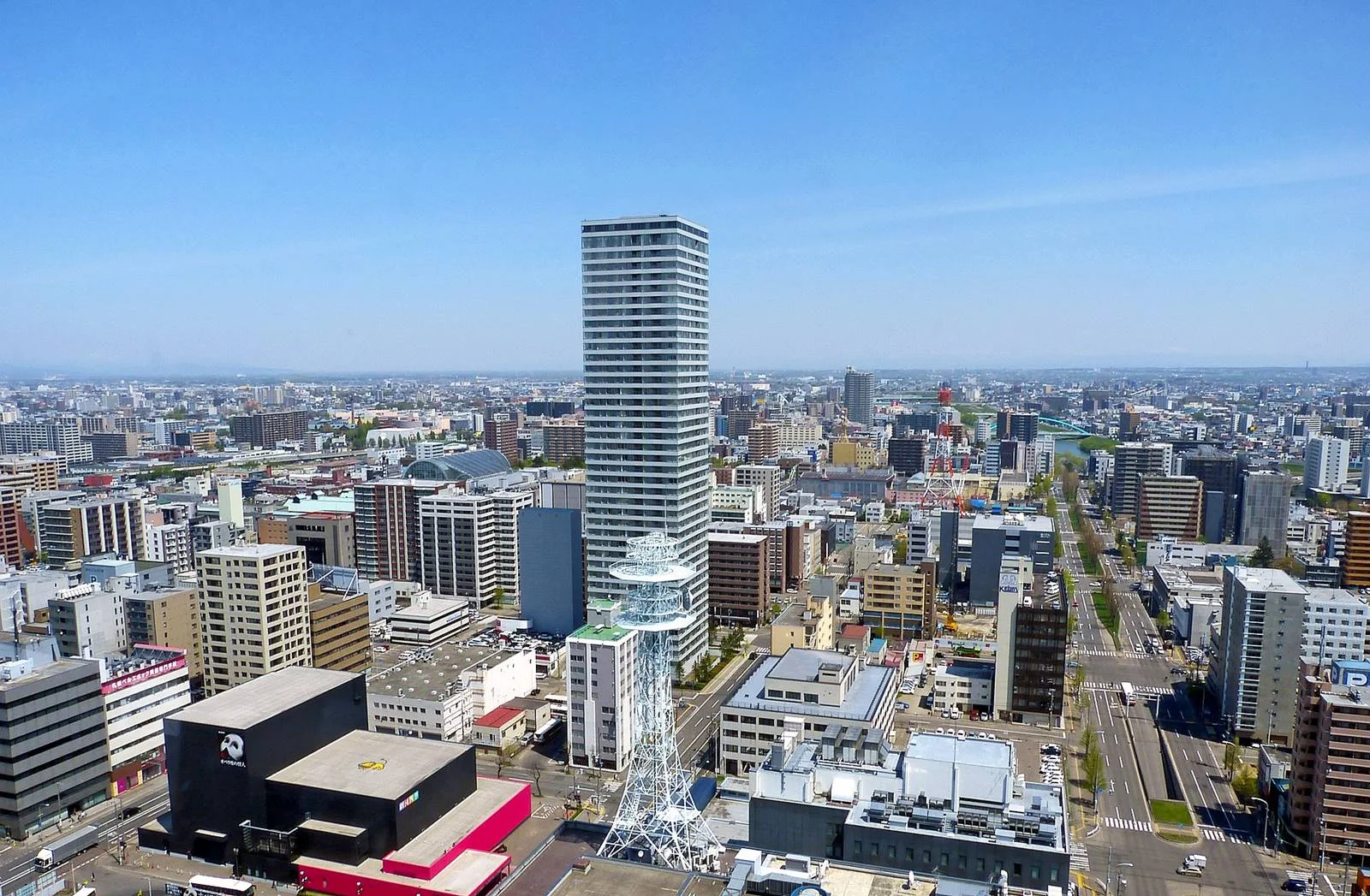
(All major rental operators in Hokkaido offer comprehensive full insurance. I strongly advise booking zero-excess full coverage: handling an accident in a foreign country is stressful enough, and full insurance waives both damage deductibles and NOC charges completely.)
5. Navigating Hokkaido Expressways & Toll Passes
Japan's expressways (自動車道 / 有料道路) are strictly tolled. Understanding how toll gates work will save you time and hassle on the road.
Toll plazas feature General Lanes (一般), ETC Dedicated Lanes (ETC専用), and Mixed Lanes. In a General Lane, you draw a ticket from the automated machine at entry and hand it to the attendant (or payment machine) at your exit to pay with cash or credit card. If you rent an ETC card from your car rental company, you simply slow down below 20 km/h and drive through the ETC lane—tolls are logged electronically, and you settle the bill when returning the vehicle. It is vastly faster and smoother, so renting an ETC card is highly recommended.

(Overhead signage clearly indicates General, ETC, or Shared lanes at Japanese expressway toll booths.)
Because toll rates across Hokkaido can add up quickly over long distances, foreign tourists can take advantage of the exclusive Hokkaido Expressway Pass (HEP). This pass offers unlimited travel on Hokkaido's expressways for a fixed price over a set number of consecutive days:


As you can see, the daily average cost drops significantly with longer passes. If you plan extensive long-distance highway travel between Sapporo, Asahikawa, Hakodate, or Obihiro, the HEP can provide immense savings. Make sure to calculate your planned route's standard toll on the official website beforehand, as shorter itineraries may not always justify the pass.
Major rental agencies—including Times, Toyota, Nippon, Budget, ORIX, and Nissan—offer the HEP at designated branches (primarily airport and central city locations). Availability can vary, so verify with your specific branch upon booking.
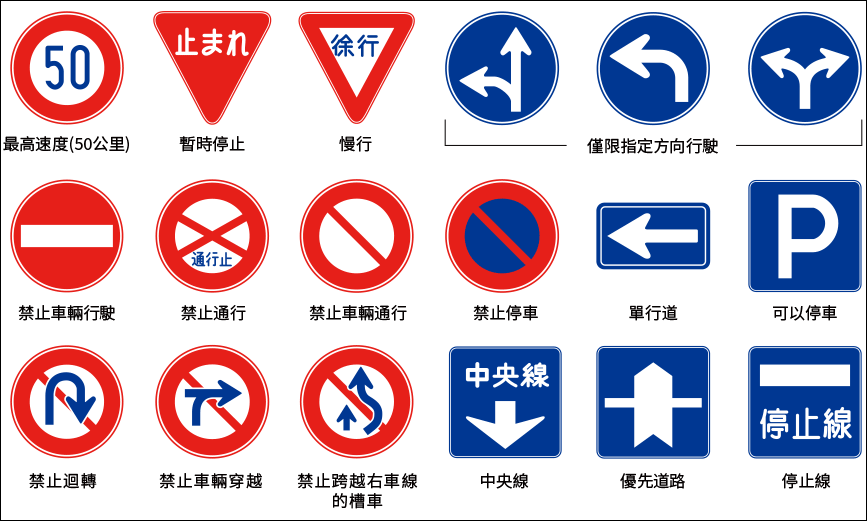
(Reference guide to essential Japanese traffic signs encountered when driving in Hokkaido)

(Speed limits on Hokkaido expressways are typically 100 km/h for standard passenger cars and 80 km/h for kei cars, while urban streets range from 30 to 50 km/h. During snowfall or severe weather, variable overhead signs will lower the speed limit accordingly.)
6. Essential Driving Tips & Reminders
- Most Hokkaido rental companies maintain a full-to-full fuel policy. Always keep your final receipt from the gas station near the return depot.
- Under Japanese traffic law, child safety seats are mandatory for children under the age of 6. Violations carry legal penalties.
- Japanese car interiors and trunk space can be compact. If your group is at max passenger capacity, book one size up (e.g., choose a 7-seater for 5 passengers, or a 9-seater/van for 7 passengers) so your luggage fits comfortably.
- If you are involved in any incident—even a minor scratch—you MUST call the police (dial 110) and notify your rental agency. Without an official Police Accident Report (事故証明書), insurance coverage is completely voided (emergency ambulance number is 119).
- After-hours returns (for red-eye flights) are often possible upon prior arrangement, though companies typically charge an after-hours service fee of around ¥1,100 to ¥2,200.
- All intended drivers must present their licenses and official translations/IDPs at pickup. Unregistered drivers are not protected by insurance in an accident.
- Japan strictly enforces pedestrian priority. Always come to a complete stop when pedestrians are crossing.
- Traffic in Japan travels on the left-hand side of the road with right-hand drive vehicles. Take a few minutes to practice around quiet streets near the depot before heading out onto major routes.

(Hokkaido is packed with rewarding driving destinations: Jozankei, Otaru Canal, Niseko, Lake Toya, and Noboribetsu Hot Springs near Sapporo; Goryokaku, Mt. Hakodate, and Onuma Quasi-National Park down south; and Furano's lavender fields, Sounkyo Gorge, Asahiyama Zoo, and the Shirogane Blue Pond up north. Self-driving saves immense time and travel costs across all these highlights.)

(Many Japanese gas stations are self-service. Pull up to a pump, select your fuel type on the touchscreen—standard passenger cars almost always take Regular / レギュラー—choose your quantity and payment method, insert cash or card, refuel, and collect your change and receipt.)

(Standard rental workflow: Airport shuttle pick-up (if applicable) → Counter registration & paperwork → Vehicle inspection (check accessories like GPS, child seats) → Familiarize controls & drive off → Enjoy your journey → Refuel full tank → Drop-off vehicle & final inspection → Shuttle bus back to airport.)
That wraps up my comprehensive guide to renting a car in Hokkaido! From bustling Sapporo and coastal Otaru to scenic Asahikawa and historic Hakodate, self-driving unlocks unparalleled flexibility, deeper adventures, and unforgettable scenic drives across Japan's great northern island!