
Kyoto Miyama | A Stunning Hidden Mountain Hamlet
Miyama in Kyoto is a breathtaking hidden gem often compared to Shirakawa-go's thatched-roof village. Designated as an Important Preservation District for Groups of Traditional Buildings in Japan, Miyama is a secluded hamlet embraced by towering green mountains. Preserved lovingly since the Edo period, its traditional architecture, rural tranquility, cultural depth, and timeless atmosphere draw travelers looking for an authentic escape.
In this comprehensive guide, I will walk you through transportation options to Miyama, must-see sights, and my personal travel diary. Whether you are planning a day trip or an overnight getaway from Kyoto, this guide will help you craft the perfect itinerary for any season!

(While the broader Miyama Town spans a wide valley, the central historic village is the Kita settlement, famously known as "Kayabuki no Sato"—the prime spot every visitor comes to see.)
1. How to Get to Miyama?
There are four main ways to reach Kyoto Miyama: rental car, sightseeing highway bus, JR Train + Nantan City Bus, and JR Bus + Nantan City Bus. Let's break down each option in detail:
1. Rental Car
Driving is straightforward: simply set your GPS or navigation to "美山 かやぶきの里 (Miyama Kayabuki no Sato)" and follow the route. The drive takes about 80 minutes from central Kyoto, or around 120 minutes from Osaka or Kobe. Here is the official route map:

(Note: The official driving guide marks Michi-no-Eki Miyama Fureai Hiroba in Kyoto Tamba Kogen Quasi-National Park as a key rest stop. It is about a 10-minute drive along the same main road to the actual thatched village of Kita "Kayabuki no Sato".)
2. Sightseeing Highway Bus
Operated by Keihan Kyoto Kotsu, these direct buses run straight to Miyama from either JR Kyoto Station or JR Sonobe Station. Please note that they operate seasonally on select dates: the Miyama Direct Bus from JR Kyoto Station primarily runs during spring and summer, whereas the Sonobe-Miyama Excursion Bus departs from JR Sonobe Station mostly in winter.
Fares, seasonal timetables, booking links, and boarding points are clearly laid out in English and Traditional Chinese on their official website, so check their schedule before traveling.

These sightseeing buses operate similarly to organized group tours. If you prefer a guided excursion, consider booking a Kyoto countryside day tour, an Amanohashidate & Miyama Day Tour, a Kyoto by the Sea Day Tour, or a seasonal Kyoto Cherry Blossom Day Tour (Departing from Osaka). These package tours handle all the logistics, allowing you to combine Miyama with other popular Kyoto suburban attractions like Amanohashidate and Ine Funaya in a single seamless day.
3. JR Train + Nantan City Bus
This is the most popular public transport method: take a regular JR train combined with a local community bus. From JR Kyoto Station, ride the JR San-in Main Line (Sagano Line) to JR Sonobe Station or JR Hiyoshi Station, then transfer to the Nantan City Bus bound for Chimi-guchi and get off at Kita (Kayabuki no Sato).

(Here is the coordinated timetable for the JR trains and Nantan City buses. An asterisk indicates that a train transfer is required at Sonobe—board the train car marked for Fukuchiyama. You can click the image for the PDF or verify it on the Nantan City official website. Bus transfers are timed to meet trains. For detailed connection steps, check this alternate timetable version.)
Using the JR Train + Nantan City Bus is cheaper than the sightseeing buses. Traveling from Kyoto Station via JR Sonobe Station costs ¥1,490 one way (JR train ¥590 + bus ¥900). Traveling via JR Hiyoshi Station costs ¥1,370 one way (JR train ¥770 + bus ¥600).
At standard fares, transferring at Hiyoshi Station seems slightly cheaper. However, Nantan City Bus sells a Nantan City Bus 1-Day Pass for ¥1,200 directly on board the bus. If you board the bus starting at Sonobe Station, using the pass makes the total round trip even cheaper: [¥590 x 2 + ¥1,200 = ¥2,380] vs. [¥1,370 x 2 = ¥2,740].
4. JR Bus + Nantan City Bus
Finally, you can travel to Miyama entirely by local buses. From JR Kyoto Station, take the JR Bus (Takao-Keihoku Line) to Shusan, transfer to the Nantan City Bus (Izumi route) to Miyawaki, and transfer once more to the Nantan City Bus (Chimi-guchi route) to get off at Kita (Miyama Kayabuki no Sato).

(Bus departures on this route are sparse, and most arrivals in Miyama are in the afternoon. However, it passes through the scenic Takao and Keihoku areas, making it an option if you wish to sightsee along the way or stay overnight in Miyama.)
By bus only, the one-way fare is ¥1,800 (Kyoto to Shusan ¥1,200 + Shusan to Miyama ¥600), which is comparable to the direct sightseeing bus. Unless you plan to explore the Keihoku and Takao valleys, this route has the lowest convenience and offers no price advantage.
※ Summary: Leaving car rentals aside, among the three public transit routes, the travel duration is roughly comparable. However, JR Train + Nantan City Bus offers the lowest fare and the most daily departures, while guided day tours or direct highway buses provide maximum ease. Unless you want to visit Keihoku, there is little reason to take the all-bus route.
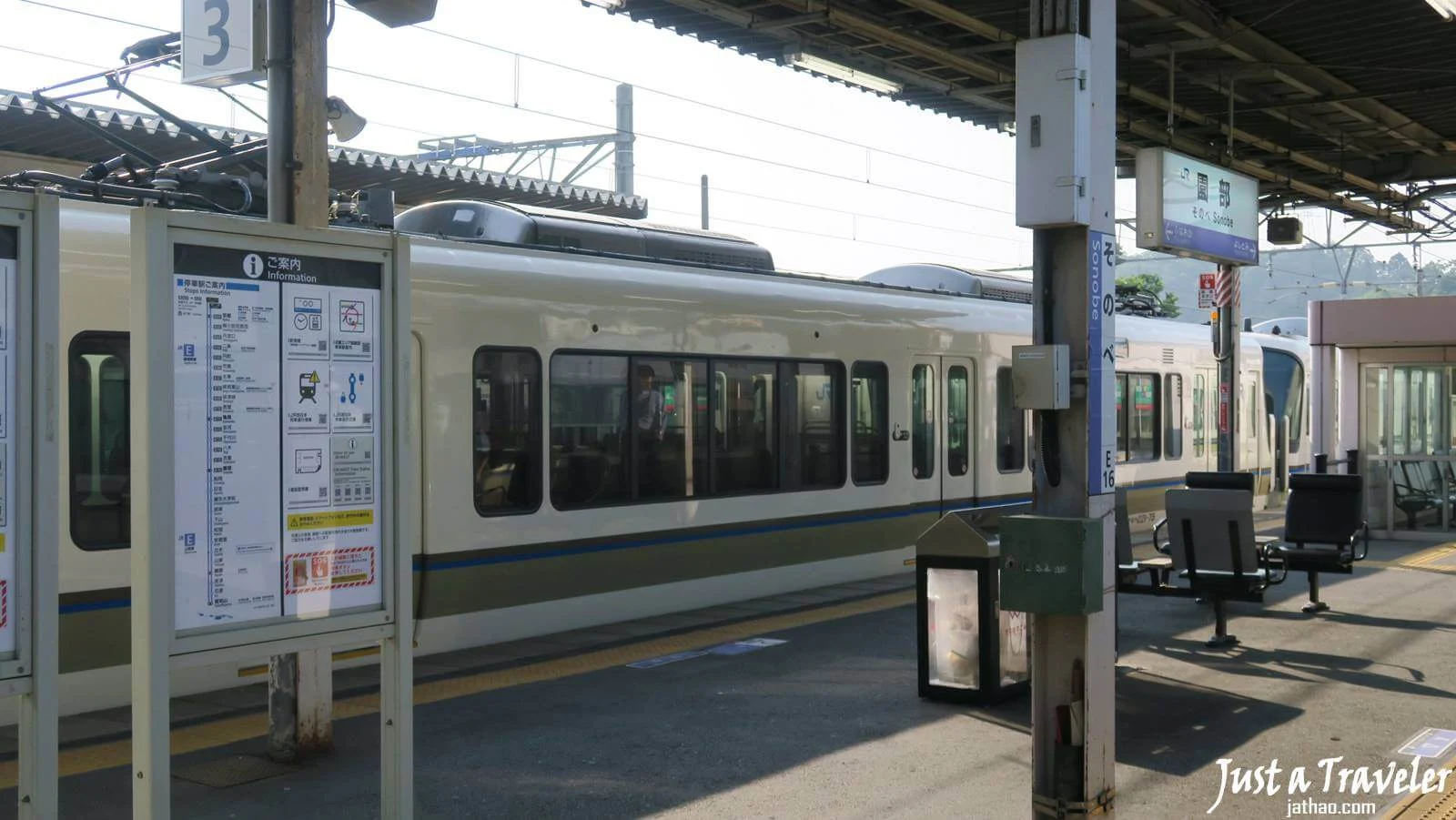
(I personally chose the JR Train + Nantan City Bus option, taking the train to Hiyoshi Station before catching the bus to Miyama. As mentioned earlier, grab a seat in the front carriages right from Kyoto. Even on direct trains, the back cars detach at Sonobe Station; on my train, only the first two cars proceeded onward to Hiyoshi.)
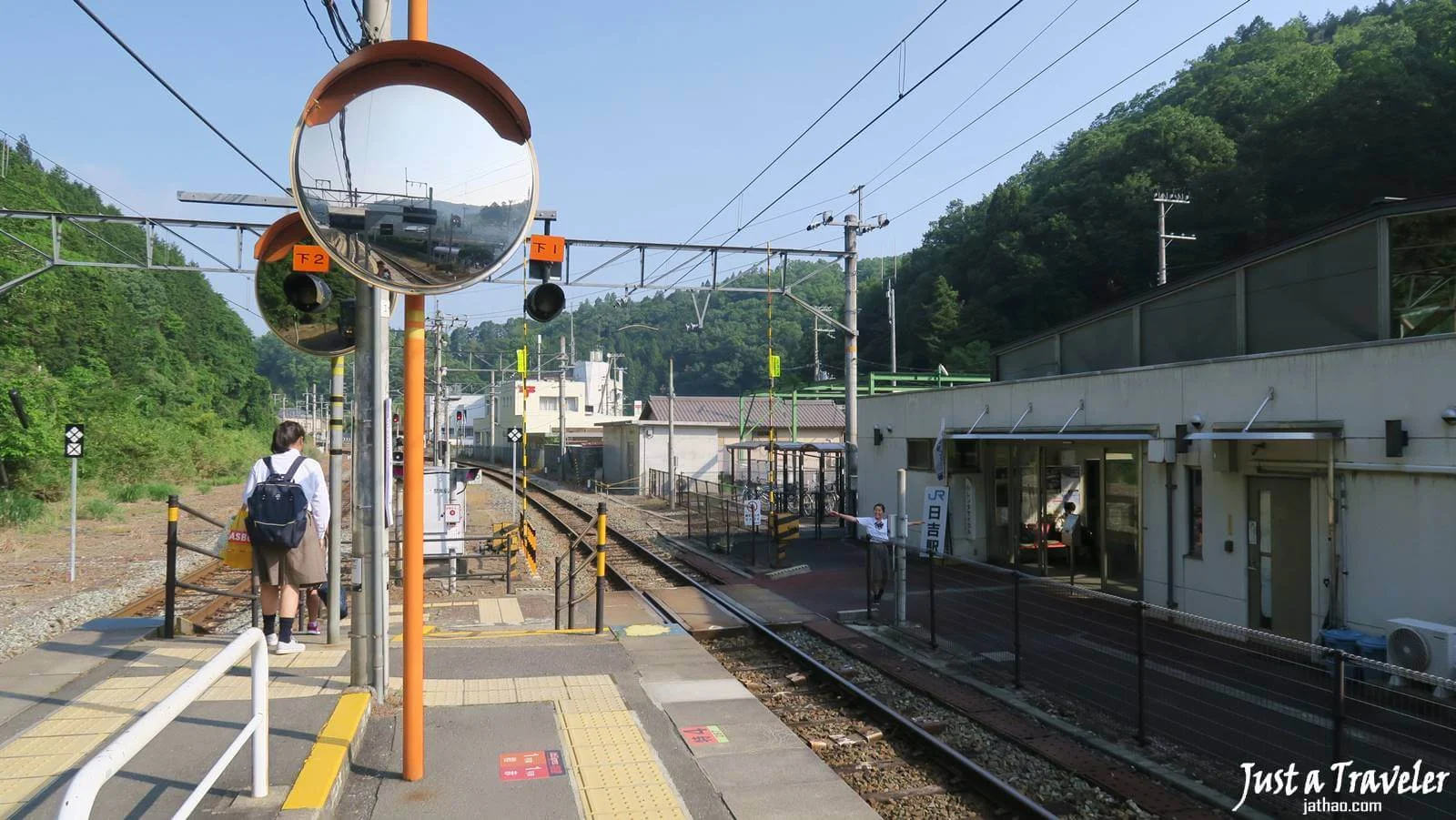
(JR Hiyoshi is a small unstaffed country station. You must exit through the very front train door beside the driver, who inspects your ticket manually because there are no automated IC ticket gates at the station exit.)

(The Nantan City Bus stop for Miyama is located directly outside JR Hiyoshi Station. Simply board and pay the driver in cash. Since a round trip from Hiyoshi costs exactly ¥1,200, there is no need to purchase the 1-Day Pass unless you board all the way from Sonobe Station.)

(After a scenic 45-minute bus ride from Hiyoshi Station, you will arrive at the "Kita (Kayabuki no Sato)" bus stop. Step off the bus, and the enchanting village of Miyama unfolds before your eyes!)
2. Exploring Miyama: What to See and Do?
Now that you know how to get here, what attractions, local snacks, and sights shouldn't you miss? First, take a look at the official tourist map of Miyama Town:

Miyama's official visitor map is delightfully hand-drawn, and you can pick up a paper copy at the local information counter. All major sights within the village can easily be explored on foot. Taking a slow, peaceful stroll along the rustic pathways while soaking in the alpine scenery is truly the best way to experience Miyama.


(Stepping off the bus, the mountain-ringed hamlet greets you with remarkably crisp, fresh air. At first glance, you instantly realize how restorative and peaceful this place is!)

(We decided to explore the western side of the village first, stop for lunch by the parking lot restaurant area, and wander through the eastern side in the afternoon. Our first photo stop was Miyama's most iconic scene: the vintage red pillar postbox in front of the community center.)

(The village lanes are narrow and peaceful. You can often see local residents going about their daily routines. Major junctions have clear directional signs pointing to each attraction.)
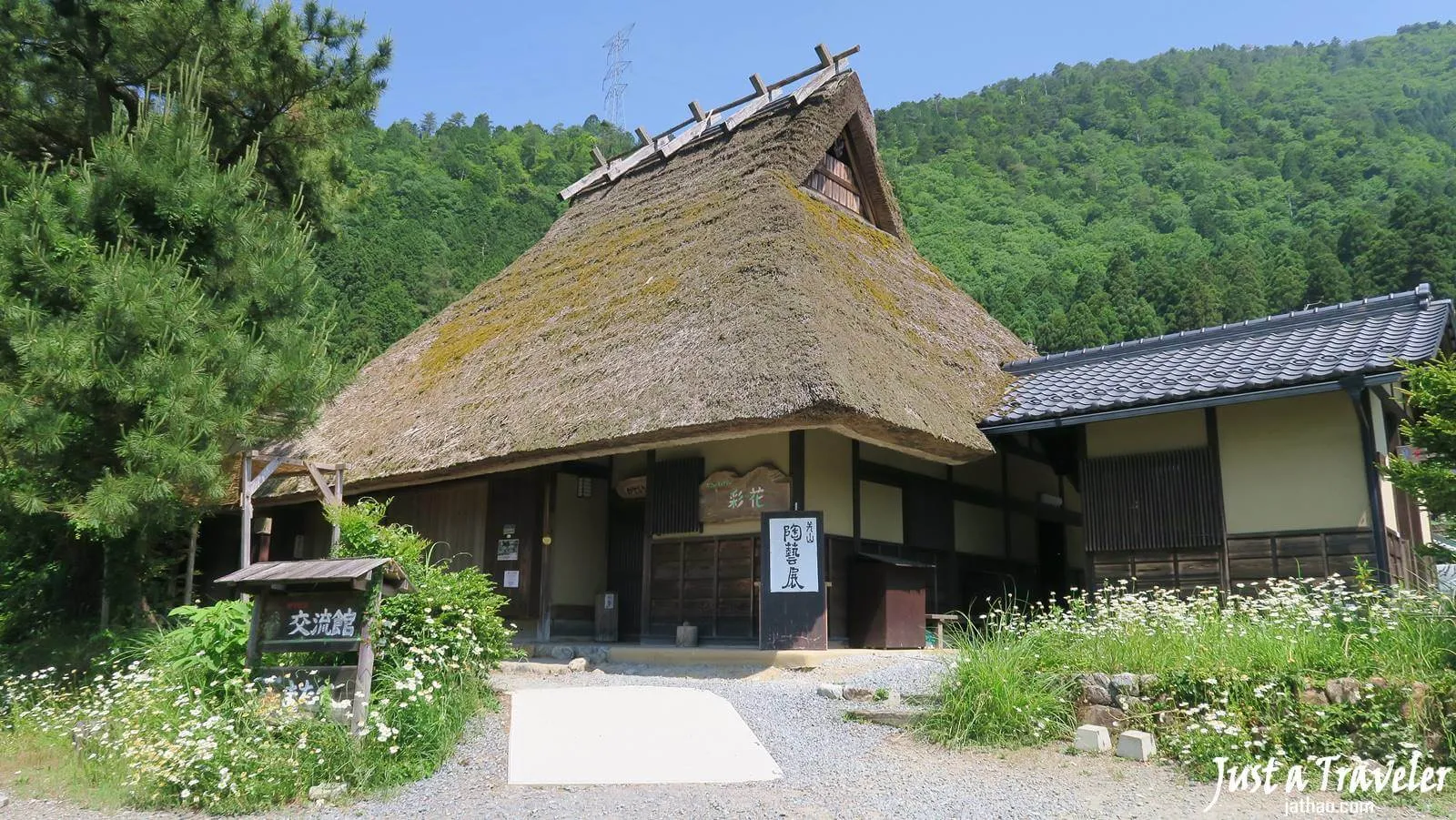
(Next, we arrived at the Miyama Kayabuki Koryukan, a cultural exchange hall displaying pottery and local paintings, featuring a tearoom, and offering traditional handmade candy-making workshops.)

(Continuing toward the westernmost edge of the village brings you to a miniature Inari Shrine. While the shrine structure itself is modest, right beside it stands a majestic sacred tree with over 400 years of history.)


(Fumyo-ji Temple sits at the northernmost point of the hamlet. Dedicated to Kannon Bodhisattva, its sacred statue is said to have been carved following prayers by Emperor Kanmu.)


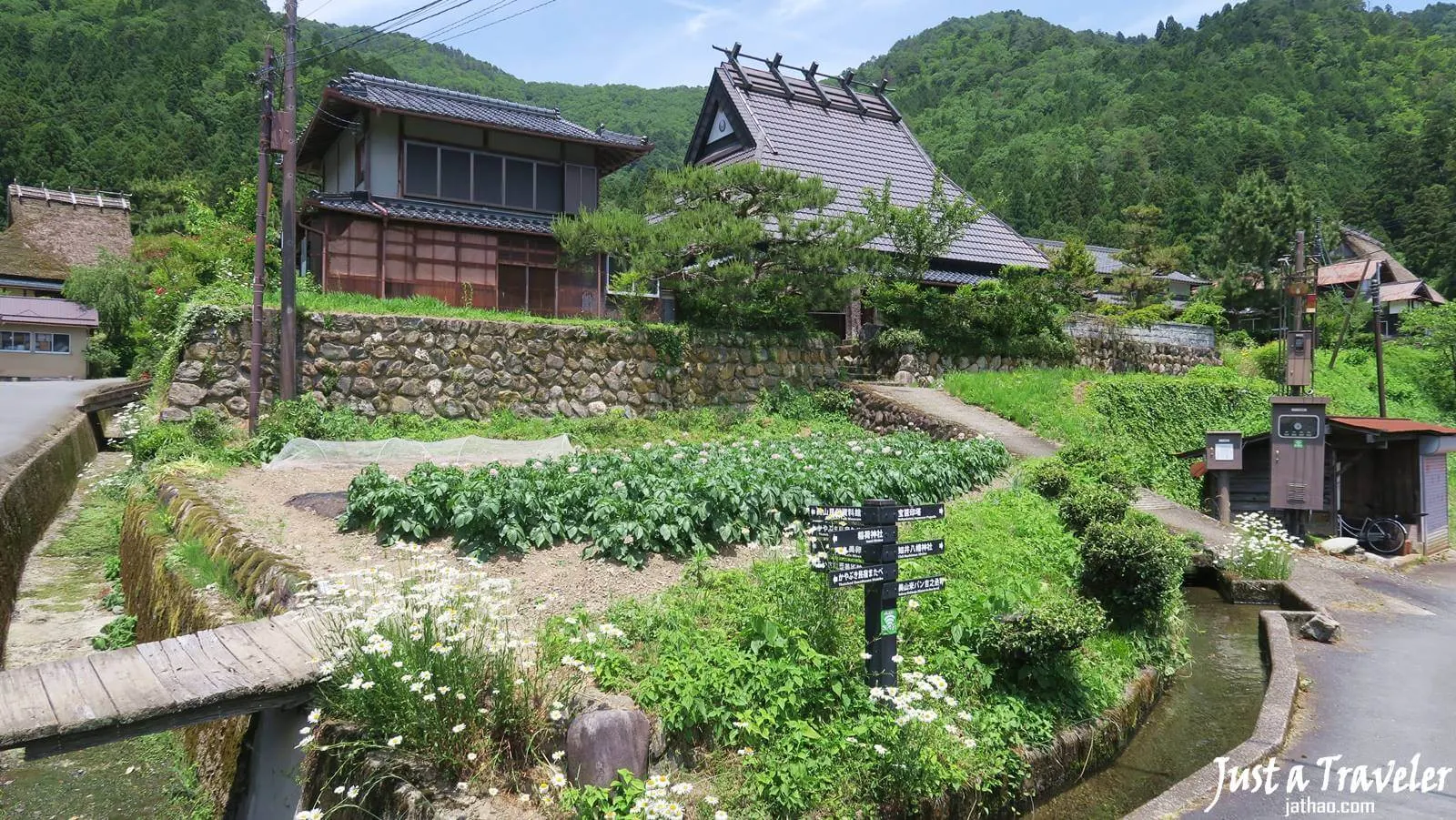
(Strolling through Miyama is exceptionally tranquil. Preserved since the Edo period, these homes are built in the distinctive "Kitayama-style" thatched roof architecture. Their signature design includes wooden crossbeams called chigi and snow-shedding slats called yukiwari along the ridge, built entirely without nails or metal fasteners. Nearly every thatched cottage here boasts a history of 150 to 200 years!)


(Reaching the center of the village, you will find the Miyama Folk Museum (Miyama Minzoku Shiryokan), an absolute must-visit for travelers. Admission is ¥300. The museum faithfully restores an Edo-period thatched farmhouse, allowing you to walk inside, study the structural timber framing, and examine antique farming implements and household artifacts to understand the village's rich heritage.)

(Seeing the interior construction of a thatched farmhouse up close is fascinating. Villagers historically wove reeds into everyday tools and baskets, a craftsmanship shared across rural Asia.)


(The Miyama Folk Museum thoughtfully serves complimentary local herbal tea to visitors. Sitting on the tatami mats, feeling the gentle summer breeze and sipping hot tea—I joked that I was turning into an old soul, but it was pure bliss!)


(Several thatched cottages in Miyama have been converted into cozy minshuku guesthouses. Many travelers opt for a two-day itinerary to spend the night here and experience deep rural hospitality. If you are interested, you can check availability and book stays through the official Miyama Town tourism website.)


(Here was one of the few places in the village where visitors gathered: a cozy little cafe named Cafe Milan. Highly praised by travelers, it is famed for its homemade custard pudding, cakes, and rich Miyama milk soft-serve ice cream, along with small souvenirs. Because Miyama remains wonderfully uncommercialized, finding a quaint spot like this is a real treat.)
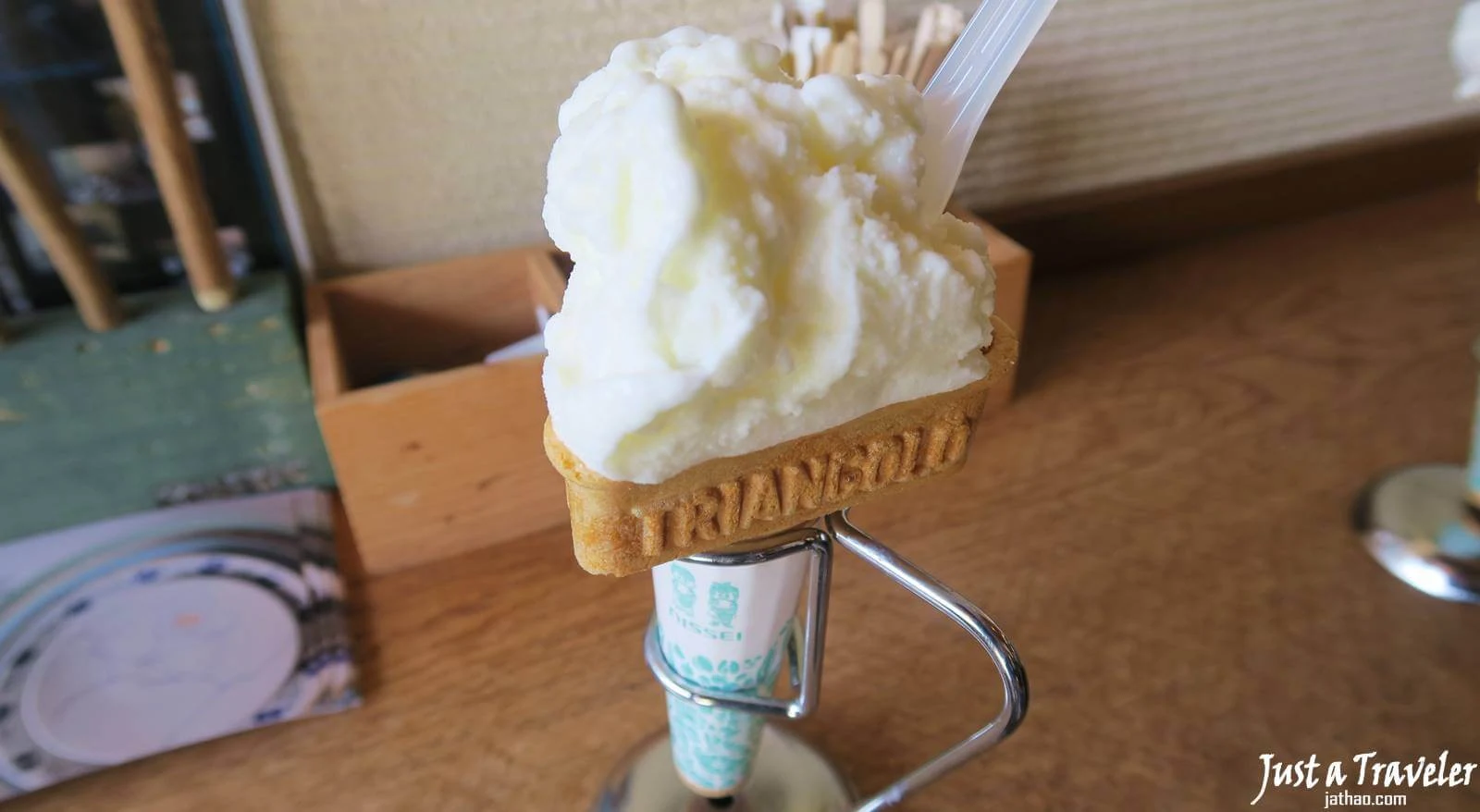
(I ordered the milk soft-serve and the handmade egg pudding. Both were silky, rich, and delicious. Definitely give them a try when you visit!)

(You won't find modern convenience stores in Miyama. Instead, near the bus stop at the village entrance, there is a charming, retro general grocery store that feels like stepping back into the previous century.)


(Next, we headed to the dining area in the southwestern part of the village, located next to the large tourist parking lot. It consists of two local restaurants and a souvenir shop. If you plan to have a proper sit-down meal in Miyama, this is essentially where everyone eats, as dining options inside the residential village are very limited.)

(Meal prices ranged between ¥600 and ¥800. I had anticipated steep tourist prices, but the food was surprisingly affordable. I ordered a bowl of hot chicken soba noodles—hearty, warming, and very satisfying.)


(As noted earlier, the adjacent souvenir shop stocks a wide array of local goods. Seeing Miyama Milk advertised everywhere, I grabbed a bottle to try, and it tasted unbelievably fresh and creamy! I highly recommend picking up a bottle when you visit.)

(Beside the dining area stands the striking red Cho-jo Grand Bridge spanning the Miyama River. Crossing the bridge brings you to a field of reeds—the natural raw material harvested to thatch the village rooftops. You can often spot locals peacefully fly-fishing in the river below.)


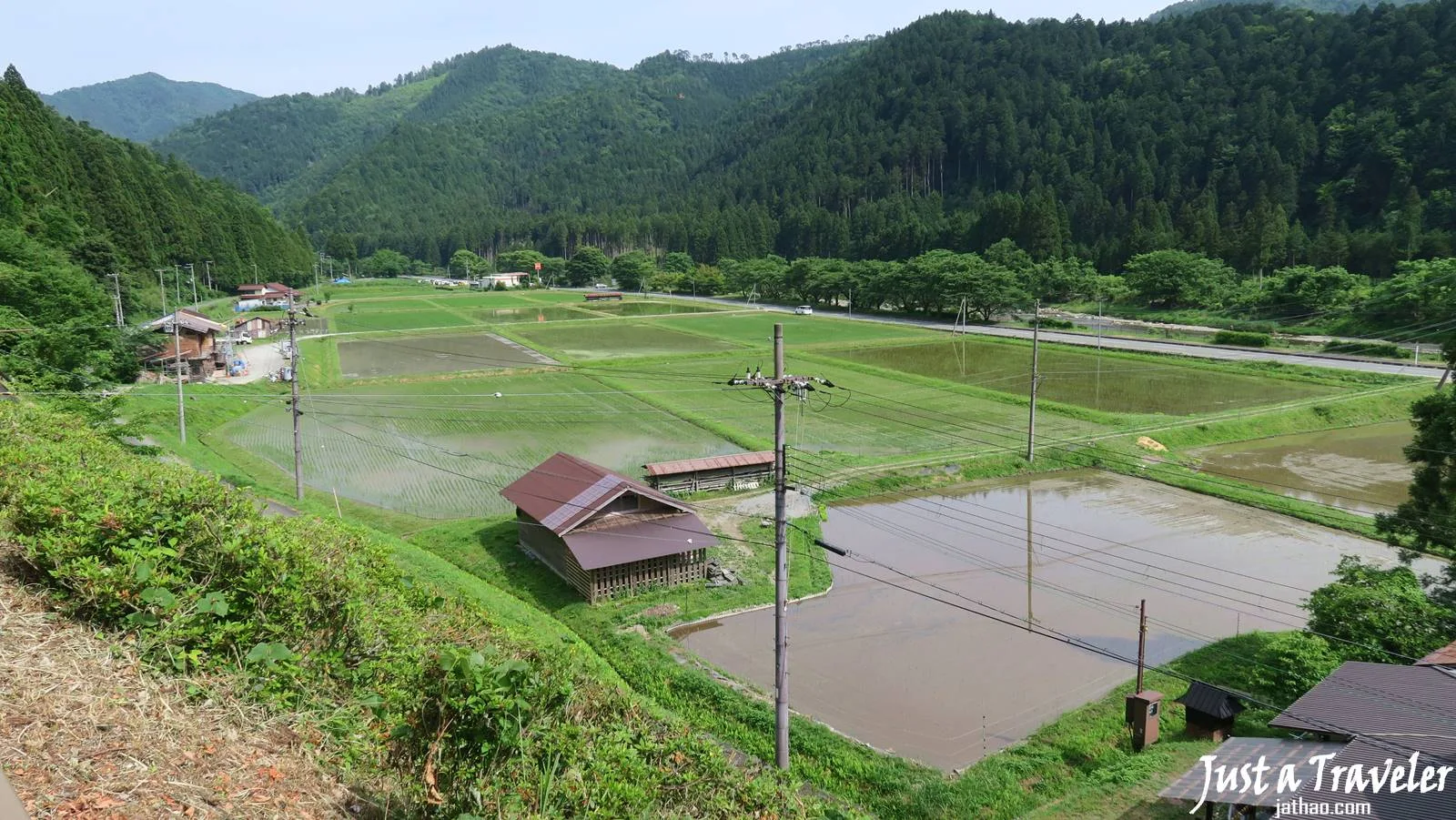
(After lunch, we explored the eastern section to visit its crowning landmark: Chii Hachiman Shrine. As the largest Shinto shrine in Miyama, it requires a short climb up stone steps through the trees, rewarding you with sweeping views across the pastoral valley.)


(Founded originally in 1071, Chii Hachiman Shrine is an ancient cultural relic registered as a Tangible Cultural Property of Kyoto Prefecture. It serves as the head shrine for the nine villages of Chii. If you happen to visit in October, you can witness their vibrant annual autumn festival.)

(I visited during June in early summer, but Miyama offers distinct charms in every season—such as the Snow Lantern Festival (Yuki Toro) in winter, and the famous "Water Hose Spraying Demonstration" (Issai Hosui) held twice a year in May and December. Originally a routine fire drill for the historic thatched homes, the sight of high-pressure water arcs raining over the hamlet has turned into a beloved spectacle attracting travelers from all over. To plan around seasonal festivals, check the official Miyama Event Calendar [Photo credit: 南丹市美山エコツーリズム推進協議会].)
Remarkably, Miyama Town is one of the rare rural destinations in Japan's Kansai region where recreational drone flights are legally facilitated through dedicated workshops, such as the ドローン飛行体験 (Drone Flight Experience). Having brought my drone along, I captured these aerial perspectives to share a whole new angle of Miyama!


That concludes my guide to Kyoto Miyama! This mountain hamlet remains a peaceful, secluded haven. While tourist numbers have steadily grown, it has resisted over-commercialization, preserving its authentic rural heartbeat and timeless culture. If your schedule allows, consider extending your exploration to the nearby Miyama Nature and Culture Village (Miyama-cho Shizen Bunka Mura) or Kyoto Tamba Kogen Quasi-National Park for an even deeper appreciation of this tranquil Japanese paradise!