
Studying in Australia | Complete Guide to the Application Process.
Many people have asked me, "Why did you choose to study in Australia?" or "Isn't it just kangaroos and koalas? (laughs)". However, I've noticed that many prospective students and parents have genuine curiosities and concerns about applying to Australian universities. I decided to write down my personal first-hand experience, hoping to give more people a clear understanding of the application process and what life is truly like. Below is a comprehensive breakdown from pre-application preparation all the way to receiving your offer and preparing for departure.

◎ Why Choose Australia?
While choosing a study destination naturally involves personal preferences, I would like to explain my decision based on objective factors. Beyond common advantages frequently mentioned online—such as Australia's stable political and economic climate, excellent working benefits, relaxed lifestyle, and robust education system—here are the key decisive factors that made my choice:
1. Favorable Climate and Minimal Time Difference.
First of all, I personally dislike living in freezing cold cities (especially during winter). The climate in places like Brisbane is warm and pleasant with plenty of sunshine. While daily temperature swings can be slightly wider, it is incredibly easy to adapt to. Furthermore, the minimal time zone difference makes it effortless to keep in touch with family and friends back home. Flight times are also significantly shorter compared to North America or Europe, making it one of the most accessible Western countries from East Asia.
2. Student-Friendly Policies: Maximum Flexibility and Post-Study Opportunities.
Compared to many other developed nations, Australia offers progressive visa policies and comprehensive social welfare. International students are permitted to work part-time up to 24 hours per fortnight/week during semesters, and full-time during official course breaks. In addition, the Australian government provides the Post-Study Work (PSW) stream visa, allowing international graduates of eligible degree programs (at least 2 years) to live and work in Australia for 2 to 4 years without strict industry restrictions. Eligible graduates can take advantage of this visa to pursue various professional jobs. For students with financial considerations, this is an immense benefit; for those planning to return home, gaining international professional work experience is a tremendous asset on any resume. You can virtually think of it as a "complimentary post-graduation work visa." Furthermore, opportunities like employer sponsorship or skilled migration pathways may open up later down the road. While immigration policies warrant extensive discussion in their own right, this article focuses on initial planning and admission procedures.

3. World-Class Education in a Fully English-Speaking Environment.
Many people might not realize that Australia has only about 40 universities offering bachelor's degrees and above. Yet according to international rankings such as the Times Higher Education World University Rankings, nearly half of all Australian universities rank among the world's top 400. This demonstrates that while Australia might have fewer institutions in sheer number compared to larger nations, the overall standard and quality are globally acclaimed. In terms of national average educational performance, Australia stands among the world's elite. Stringent regulations, structured foundation programs, English training, student support services, and tuition protection frameworks safeguard educational standards, giving students reliable academic peace of mind.
4. Abundant Travel Spots and a Relaxed Quality of Life.
According to the Economist Intelligence Unit's Global Liveability Index, Australian cities consistently dominate the rankings, with cities like Melbourne, Adelaide, Sydney, and Perth regularly featured among the world's most liveable cities based on stability, healthcare, culture, environment, education, and infrastructure. In addition, Australia boasts pristine natural ecosystems, breathtaking national parks, and vibrant recreational opportunities, offering an incredible work-life-study balance.

◎ Should You Use an Education Agency?
This is one of the questions I encounter most frequently. Applying to Australian universities through authorized education agents is quite different from applying to US or UK schools. For US college applications, hiring an agency or college counselor often costs thousands of dollars. However, when applying to Australian universities, my total expenditure during the agency application phase was exactly 0.
"Free?" "Are you serious?" "How do they make a profit?"
The reason is that certified education agencies have official partnerships with Australian universities, which compensate agencies directly upon successful student enrollment. In essence, it forms a win-win situation for the student, agency, and institution. Some people might wonder whether agents unduly push students toward specific partner universities. In my experience, even when I listened to recommendations and ultimately insisted on my preferred university, they fully respected and processed my choice. The final decision always rests in your own hands. If you can consult certified agents for free, obtain accurate institutional information, and have them manage application submissions without any service fee, my perspective is: why not take full advantage of it?
◎ Step-by-Step Application Process
Now, let's dive into the core topic—here is the step-by-step roadmap for applying to Australian universities:

To begin with, you need to prepare your English proficiency test scores (IELTS or TOEFL) and official English academic transcripts. Next, evaluate your academic standing and target programs with your counselor to determine which universities to apply for.
A common question here is whether you need letters of recommendation or personal statement essays like in the United States. I asked the same question, and the agent straightforwardly told me that Australian admissions rely predominantly on concrete academic merits and verified credentials rather than generic essays that could easily be ghostwritten. After arriving here, I completely understand this pragmatic mindset: hard data and authentic credentials speak for themselves!
↓
Next, you will receive a Letter of Offer (Offer) along with payment instructions from the university. Once you sign the acceptance agreement and submit your tuition deposit receipt back to the university, you will wait for the institution to issue your official Confirmation of Enrolment (CoE).
※ Note: The invoice includes Overseas Student Health Cover (OSHC), which is legally mandated by the Australian government for student visa holders. The coverage duration aligns with your visa validity, costing roughly AU$34.8 per month.
↓
Once you receive your Confirmation of Enrolment (CoE), you are officially an admitted student! You can then proceed to lodge your Australian student visa application online and schedule your mandatory immigration medical examination. The student visa application fee is AU$1,600. In Taiwan, health assessments must be completed at approved panel clinics by booking an appointment in advance. The examination is a routine health screening that usually takes around 30 minutes. Be sure to bring your passport, eMedical referral letter, two recent passport-sized photos, and the examination fee. Below is a directory and fee summary for approved panel clinics in Taiwan:
| Region | Hospital / Clinic | Fee (NTD) |
| Taipei | Country Hospital No. 11, Lane 112, Sec. 4, Ren'ai Rd., Da'an Dist., Taipei City Tel: (02) 27081166 ext. 8905 Mon–Fri: 9:00 am - 5:00 pm Sat: 1:30 pm - 3:30 pm Panel Physicians: Dr. Chung-Sen Tan / Dr. Chi-Hsien Fan / Dr. Li-Fen Chang |
2,500 |
| Taiwan Adventist Hospital (Health Examination Center) No. 424, Sec. 2, Bade Rd., Songshan Dist., Taipei City Tel: (02) 27718151 ext. 2773 Mon–Wed: 8:30 am - 11:00 am, 1:30 pm - 4:00 pm Thu, Fri & Sun: 8:30 am - 11:00 am Panel Physicians: Dr. Hui-Ting Huang / Dr. Hui Chen / Dr. Ping-Chuan Lee / Dr. Chi-Hsun Huang / Dr. Meng-Hui Tsai / Dr. Lung-Chu Chi |
2,500 | |
| Taichung | China Medical University Hospital (Health Center) No. 2, Yude Rd., North Dist., Taichung City Tel: (04) 22331008 Mon, Wed, Fri: 1:30 pm - 4:30 pm (Chest X-ray only) Thu: 8:30 am - 11:30 am (Full medical exam) Panel Physician: Dr. Chiu-Sung Liu |
2,500 |
| Kaohsiung | Kaohsiung Medical University Chung-Ho Memorial Hospital (Health Care Dept.) No. 100, Ziyou 1st Rd., Sanmin Dist., Kaohsiung City Tel: (07) 3121101 ext. 6863 Mon–Fri: 8:30 am - 5:00 pm Sat: 8:10 am - 11:30 am (Chest X-ray only) Panel Physicians: Dr. Chia-Yen Dai / Dr. Chao-Ling Wang / Dr. Chia-Yi Lin / Dr. Chuan-Feng Huang / Dr. Meng-Hsuan Hsieh |
2,800 |
| ※ Fees and details are subject to change. Please refer to the official Department of Home Affairs website for the most up-to-date information. ※ If you are already within Australia, you can complete your health assessment onshore. Please check the links for approved clinics and medical exam fees. |
||
↓
Finally, once your visa is approved, you can open an Australian bank account (agencies usually assist with this), book your flights, and arrange accommodation. Booking flights is straightforward, while accommodation can generally be secured within one month before your arrival. There are numerous student forums, rental websites, and Facebook housing groups where you can find reliable listings and connect with fellow students. Joining these communities early lets you compare options and communicate with landlords. After packing your luggage and tying up loose ends, you are all set to embark on your exciting Australian study adventure!

(My first photo upon arriving in Australia—waving goodbye to China Airlines and Taiwan)
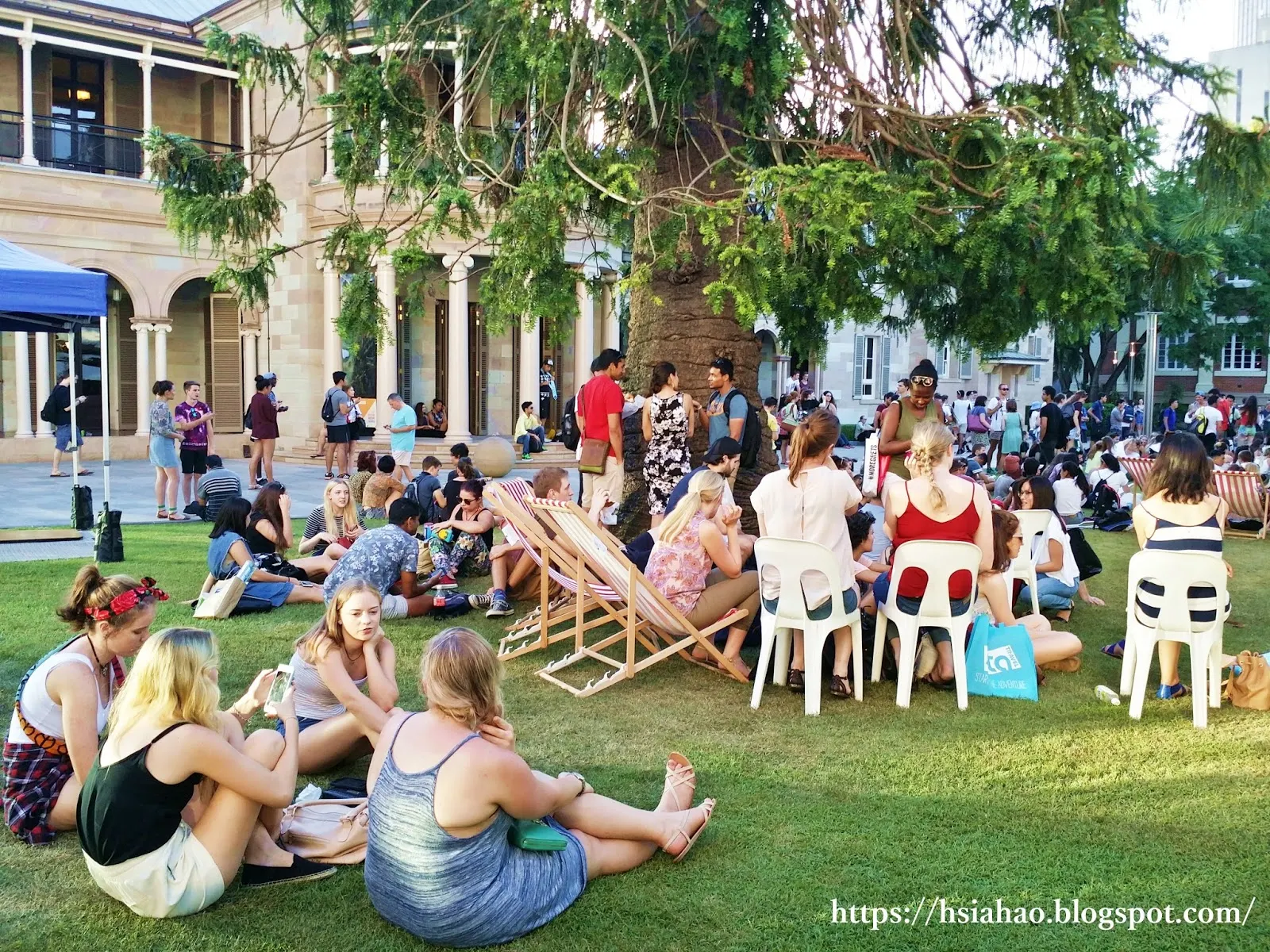

The application process is merely the starting line. Studying abroad will bring endless new perspectives, personal growth, challenges, and unforgettable memories. I sincerely wish all future students heading to Australia a safe journey and every success in achieving your dreams!