
Kokusai-dori | An Absolute Must-Visit in Okinawa!
Heading to Okinawa with an unstoppable shopping urge? Wondering where to start?
Naha's most famous attraction, "Kokusai-dori" (literally "International Street"), was originally known as "Shin-Kendo" (New Prefectural Road). Following the Battle of Okinawa in 1944, it was renamed Kokusai-dori. Major department stores, boutiques, and arcades sprang up one after another. Over time, it grew into Okinawa's liveliest commercial hub, famously nicknamed the "Miracle Mile." Today, it is a bustling shopping haven that virtually every international traveler visits when exploring Okinawa!
In this guide, besides introducing Kokusai-dori—Okinawa's premier shopping district that tops almost every traveler's itinerary—I will also share worthwhile attractions located nearby, offering you plenty of flexibility and inspiration for your travel plans!

(Entrance to Kokusai-dori)
◎ Where is Kokusai-dori Located?
If you take the Okinawa Monorail (Yui Rail) from Naha Airport, you will arrive at this bustling boulevard in just about 15 minutes. The street stretches roughly between Kencho-mae Station (Prefectural Office) and Makishi Station. That means both ends of Kokusai-dori are anchored by monorail stations, and frequent local buses run straight along the avenue, making public transit exceptionally convenient. However, parking spaces along the street are quite limited for rental cars, so travelers renting a car are advised to park slightly on the perimeter and walk in (such as near the Okinawa Prefectural Office or Asato Station).
Because Kokusai-dori boasts such outstanding amenities and unbeatable convenience, it is a top choice for accommodation when staying in Okinawa. Personally, I strongly recommend that if you are spending nights in Naha City, stay close to Kokusai-dori—ideally within the bordered area shown on the map below for maximum convenience.

(Kokusai-dori Location Map)
◎ What to See and Do Along Kokusai-dori?
Since the name translates to "International Street," you might naturally picture just a single thoroughfare lined with stores. While that is true—Kokusai-dori is indeed packed with two lively rows of shops waiting to be explored—if you skip the "surrounding side streets," you will miss out on so many authentic, charming experiences!
The "surrounding area" refers to the network of side streets and alleyways branching off Kokusai-dori. Within easy walking distance, you will discover Department Store RYUBO, Naha City Museum of History, Makishi Public Market, Heiwa-dori, Ukishima-dori, and Tsuboya Pottery Museum. Below is a detailed walkthrough of this delightfully walkable shopping paradise and its nearby highlights!

1. Kokusai-dori (The Main Street)
This is Naha's most energetic, iconic tourist and commercial avenue—the celebrated gateway of Okinawa travel known as the "Miracle Mile." Both sides are packed with diverse stores, including drugstores, souvenir shops, apparel boutiques, department stores, izakayas, and local restaurants. In short, whether you want to shop, dine, or stock up on gifts, Kokusai-dori is an unmissable destination!


(Lined with swaying palm trees—the relaxed island vibe is just wonderful!)

(In the middle section of Kokusai-dori sits the Naha City Tourist Information Center. Besides picking up helpful travel brochures, you can buy transit passes and discount attraction tickets. The plaza outside also features a large interactive video screen that kids absolutely love!)

(The famous Okashigoten on Kokusai-dori, specializing in classic Okinawa specialties and souvenirs)

(Okinawan life wouldn't be complete without Awamori! Even though Okinawans historically boast one of the highest life expectancies in Japan—true longevity champions—local TV commercials still playfully advise locals to drink a bit less to safeguard their proud health record. Needless to say, locals happily raise their glasses anyway. Kanpai!)

(Every true Okinawan owns a traditional floral shirt known as Kariyushi Wear. Deeply woven into local culture and everyday life, it is widely worn on the streets and serves as standard summer business attire—essentially a modern Ryukyuan shirt. Look, even Pikachu has joined the tropical island style!)
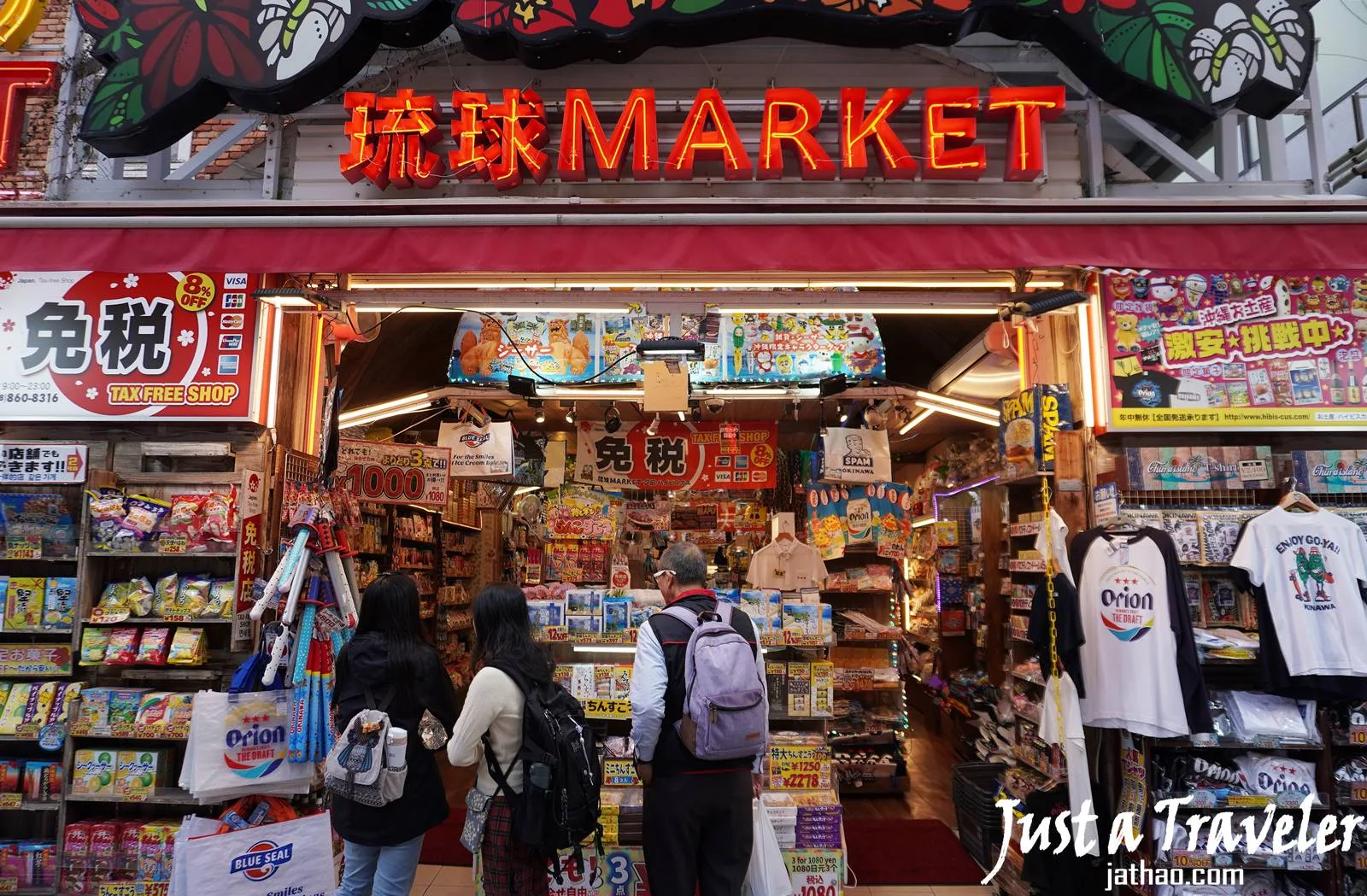
(Because Kokusai-dori is so close to Naha Airport and concentrates so many shops in one place, it is often scheduled as the very last stop before flying out, giving travelers the perfect chance to complete their gift shopping!)
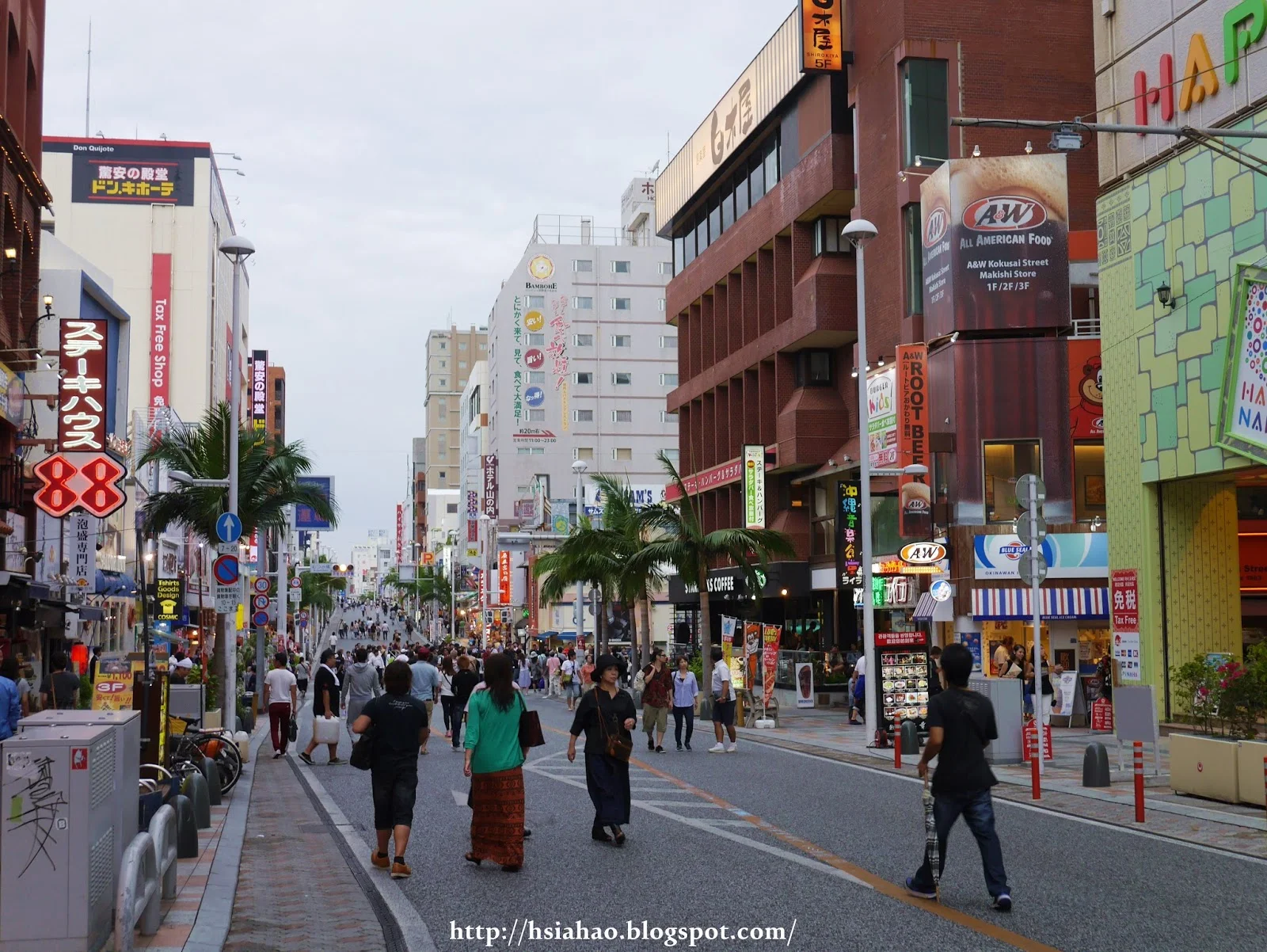
(If you happen to visit Kokusai-dori on a Sunday between 12:00 PM and 6:00 PM, the street is closed to vehicular traffic for the "Pedestrian Paradise" [Hokousha Tengoku]. It's a wonderful, rare opportunity to stroll freely down the open roadway, window-shop, and snap great photos!)


(Night falls over Kokusai-dori and the nearby Miebashi area. Most retail shops along Kokusai-dori remain open until around 9:00 PM, though hours vary by store. A local once proudly told me that Okinawans stay up much later than people in mainland Japan and keep shops open later too. I found that amusing, considering Taiwan is a true 24-hour wonderland! Haha!)
2. Secondary Shopping Alleys (Heiwa-dori, Ukishima-dori, etc.)
Roughly midway along Kokusai-dori, numerous side alleys branch out on both sides. Here you will encounter far more locals going about their daily routines (the main avenue caters more to tourists). These arcades boast a richer variety of street snacks, artisan handicrafts, vintage apparel, unique souvenirs, and indie boutique shops—perfect for travelers who enjoy slow treasure-hunting and local lifestyle vibes. Even better, these secondary arcades feature covered roofs, shielding you comfortably from both summer sun and rainy days!


(Whether along Kokusai-dori itself or inside neighboring covered arcades like Heiwa-dori and Ichiba Hondori, you will find fantastic souvenir shopping. In my experience, prices on the main avenue run slightly higher, while merchandise deeper inside the arcades tends to be more budget-friendly. All in all, this is Naha's ultimate zone to shop for authentic Okinawa souvenirs, making it a favorite final-day stop for travelers before heading to the airport!)
3. Makishi Public Market
Wander deeper into the arcades and you will encounter "Makishi Public Market" (First Makishi Public Market), fondly dubbed the "Kitchen of Okinawa." Following several years of extensive renovation, the market has reopened with a sleek, modernized, and fully air-conditioned facility. Happily, it preserves its iconic culinary tradition: pick out fresh seafood on the first floor and take it upstairs to the second-floor food court to have it cooked on the spot (known as *mochiage*). You can also sample prepared dishes right away or shop for local meats, fresh tropical produce, seasonings, and dried specialty goods—an absolute treat for traditional market lovers!


(With a rich history spanning over 70 years, "First Makishi Public Market" stands as Naha's largest and most iconic public marketplace. If you love fresh seafood markets, be sure to also check out our guide to Okinawa's top 3 fish markets!)

(The on-site cooking fee generally starts around ¥550 per person for three ingredients, calculated according to the ingredients and preparation styles, so clarify details with the vendor beforehand. Stalls here comfortably accommodate travelers speaking English or Mandarin. While I have not tried haggling myself, some visitors report that certain stalls offer slight flexibility or complimentary side dishes, so feel free to ask politely!)
4. Department Store RYUBO & Naha City Museum of History
Department Store RYUBO sits right at the western entrance of Kokusai-dori, immediately adjacent to Kencho-mae Station. In fact, a direct pedestrian footbridge on the 2nd floor connects the department store seamlessly with Kencho-mae Station! Much like classic Japanese department stores, it carries an extensive selection of Japanese goods, along with exclusive boutique brand counters found nowhere else in Okinawa. The complex also features a parking garage (up to 100 vehicles) and a movie theater, offering dedicated shoppers hours of delightful retail therapy!

(Exterior of Department Store RYUBO, commanding the major intersection at the gateway to Kokusai-dori)

(Directly opposite Department Store RYUBO stands the distinctive Okinawa Prefectural Government Building, which also serves as a key boarding point for the Hip Hop Sightseeing Bus.)

(The pedestrian plaza between the station and the Prefectural Office is wonderfully pleasant to stroll through!)

(RYUBO carries a huge variety of lifestyle goods, stationery, books, children's items, fashion apparel, cosmetics, and fine liquors, plus a budget-friendly basement food hall [depachika]. For details, see the official RYUBO Floor Directory.)
Sharing the same building is the Naha City Museum of History, conveniently located on the 4th floor of RYUBO. As soon as you exit the central elevators, clear signage directs you inside. This museum focuses specifically on the historical evolution of Naha City itself. Unlike the broad historical scope found at the Okinawa Prefectural Museum & Art Museum (Okimu) in Shintoshin, this exhibition is more targeted and localized, showcasing captivating artifacts and stories unique to Naha. History enthusiasts should certainly drop by!

(4th Floor Layout Directory)

(Just step off the central elevator on RYUBO's 4th floor to reach the museum entrance and ticket desk)
♁ Visitor Information:
Opening Hours: 10:00 – 19:00
Closed: Thursdays
Admission: Adults: ¥350; University students & below: Free (Show an active Okinawa Monorail 1-Day / 2-Day Pass for a 20% discount)
Official Website: Naha City Museum of History
5. Tsuboya Pottery Museum
Everywhere you look in Okinawa, ceramic artistry catches the eye. Even the ubiquitous Okinawan "Shisa" lions are classic testaments to traditional pottery craftsmanship fused with spiritual island culture. Naha's Tsuboya District has served as the historic ceramic heartland of Okinawa since the Ryukyu Kingdom era. Today, this rich pottery heritage flourishes throughout the neighborhood, with charming cobblestone alleys lined with heritage kiln structures and handcrafted ceramic decorations. If you wish to learn more about the art of Okinawan pottery (*yachimun*), this museum is the ideal destination!


(The eye-catching giant Shisa landmark near Makishi Station on Kokusai-dori was also handcrafted right here in Tsuboya)
♁ Visitor Information:
Opening Hours: 10:00 – 18:00
Closed: Mondays
Admission: Adults: ¥350; University students & below: Free (Show an active Okinawa Monorail 1-Day / 2-Day Pass for a 20% discount)
Official Website: Tsuboya Pottery Museum
*Note: Ticket rates posted on certain monorail promotional signs may differ slightly; on-site ticket booth pricing prevails, and monorail ticket holders still enjoy the 20% off promotion!
That concludes our complete guide to Kokusai-dori and its surrounding highlights! Kokusai-dori remains one of Okinawa's most essential attractions. Even though I have visited countless times, every trip to Okinawa feels incomplete without taking a walk down this boulevard. Before you know it, you will find yourself back here soaking in the vibrant atmosphere. I am sure you will also fall under the lively spell of the "Miracle Mile" during your visit!