
Pregnancy & Childbirth in Australia | A Complete Journey
After living in Australia for years, we finally welcomed our little one here. For anyone experiencing pregnancy and childbirth in Australia for the first time, it is completely normal to feel nervous or uncertain. However, having gone through the entire journey ourselves, we realized that giving birth in Australia is actually a very manageable and reassuring experience.
Below is a detailed, chronological breakdown of our real-life experience with pregnancy, antenatal check-ups, labor, and postnatal hospital care in Australia. We hope this complete guide will help other parents going through the same process!

1. Pregnancy & Antenatal Care
Once you discover you are pregnant in Australia, your first step is to book an appointment with a General Practitioner (GP) for confirmation. Your GP will arrange initial blood tests, dating ultrasounds, and other essentials, setting you up on a routine antenatal schedule.
In Australia, antenatal care generally follows one of three models: public hospital care, private hospital care, or GP Shared Care (routine check-ups with your GP, with key milestone visits at the hospital). In public and private hospitals, antenatal appointments are predominantly led by midwives, whereas GP Shared Care is managed by your GP.
Compared to places like Taiwan, routine antenatal check-ups and ultrasound scans in Australia are far fewer (first-time parents definitely need a bit of nerves of steel!). Detailed screenings are reserved strictly for key gestational weeks, while routine visits mostly focus on monitoring blood pressure, temperature, mental wellbeing, and general lifestyle. For instance, you will likely only get 3 to 4 ultrasounds across the entire pregnancy. Aside from the milestone weeks, many check-ups feel very brief and routine—Australia strictly embraces a natural, low-intervention medical philosophy.
In addition to helping you choose your care model, your GP will submit a referral letter to book your maternity hospital for milestone visits and delivery. You can choose between public and private hospitals. Here are the key differences:
| Hospital Type | Public Hospital | Private Hospital |
| Costs | Free (covered by Medicare) | High; requires private health insurance, with out-of-pocket gap fees depending on policy |
| Choice of Doctor | On-duty doctors and midwives | You can choose your dedicated obstetrician and midwife |
| Amenities & Service | Standard care adhering to clinical guidelines | Personalized perks, such as guaranteed private rooms, premium meals, etc. |
| Birthing Options | Both vaginal and caesarean births; natural birth is prioritized, with C-sections performed only if medically necessary | Flexible choice between vaginal or elective C-section; scheduled delivery dates available |
| Wait Times | Longer wait times for clinic appointments and non-urgent admission | Flexible scheduling and minimal wait times |
| Best Suited For | Families on a budget or without private hospital insurance | Families with private insurance seeking premium comfort and personalized care |
*Note: Private hospital out-of-pocket costs vary widely. Across the entire pregnancy (care and birth), expect out-of-pocket expenses roughly between AUD $3,000 and $8,000 depending on your obstetrician, hospital, and insurance cover. Crucially, Australian private health insurance generally requires a 12-month waiting period for pregnancy and birth cover. That means getting insurance after finding out you are pregnant is too late; plan well in advance if you intend to go private.
We ultimately decided on a public hospital because our residential catchment fell under Mater Mothers' Hospital (public hospitals have strict geographical catchments, so you cannot choose outside your zone). Mater Mothers' is renowned as the top-rated public maternity hospital in Brisbane, and it shares the same physical building and medical infrastructure with the private hospital. This gave us immense peace of mind regarding equipment, clinical quality, and care standards, so saving significantly on costs made it an easy choice!

(This is the typical Australian antenatal check-up schedule. Frequency starts at once every four weeks and gradually increases to once a fortnight. If any issues are flagged, extra tests will be scheduled. The hospital’s schedule leaflet is comprehensive, clearly mapping out blood tests, ultrasounds, and vaccinations according to standard protocols.)

(We opted for GP Shared Care because we had a trusted, long-term family GP who is located close to our home. This made regular check-ups extremely convenient. Crucial milestone visits still took place at the hospital, so we felt completely supported on both ends.)

(Some first-time parents may feel uneasy that public hospital appointments are handled by midwives rather than obstetricians. While midwives are not medical doctors, their clinical knowledge and hands-on delivery experience are second to none—after all, they are the ones delivering the babies on the frontline! We learned so much during our interactions with the midwives and found ourselves looking forward to our hospital appointments even more than GP visits.)

(Comprehensive ultrasounds take place at specific gestational milestones, such as the 12-week Nuchal Translucency scan and the 20-week Morphology Scan. Unlike other countries where scans happen at every check-up, waiting weeks between glimpses of your baby makes each scan uniquely exciting. Note that taking photos or filming inside the ultrasound room is strictly prohibited; however, the hospital uploads high-resolution images and videos to an online portal for you to download afterwards.)
2. Induction of Labor
Not everyone needs an induction, but our little one stayed put past 41 weeks. If your baby has not arrived by 41 weeks, the hospital will proactively contact you between 41+1 and 41+4 weeks to schedule an induction. For fetal safety, pregnancies are not allowed to stretch into 42 weeks.
There are 3 main methods of labor induction:
- Membrane sweep (stretch and sweep): Gently separating the amniotic sac from the cervix to trigger natural labor hormones.
- Balloon catheter (Foley balloon): Inserting a small balloon into the cervix and inflating it with sterile water to mechanically dilate the cervix.
- Oxytocin (Syntocinon) infusion: Administering synthetic hormone intravenously to induce regular uterine contractions.
1. Membrane Sweep
These methods are not performed all at once; they are administered in sequential stages. Midwives start with the gentlest, most natural intervention—a stretch and sweep—to encourage the body to start labor naturally. With the mother's consent, this can be performed by a hospital midwife starting from 39 weeks onwards.

(The membrane sweep was performed by our midwife and took only about 10 minutes.)
2. Balloon Catheter Induction
If a stretch and sweep does not kickstart labor, the next step is mechanical dilation using a cervical balloon catheter. After the sweep, the hospital sent us home to wait 48 hours for natural contractions. Since nothing happened, we checked back into the hospital 48 hours later for the balloon catheter.
The balloon applies gentle mechanical pressure to dilate the cervix, which can trigger contractions at any time. When this step is performed, you can choose to be admitted immediately or wait at home. While staff can reserve a bed for you, they usually recommend waiting at home for about 12 hours before returning for an assessment.

(Whether you stay in the hospital or go home for 12 hours, from this point onwards you must have your full hospital bag ready—baby clothes, adult clothes, diapers, ID, and Medicare card. The hospital provides a handy checklist beforehand, so packing is straightforward.)

(Inserting the balloon catheter was quick, taking under 30 minutes. Although we originally reserved a hospital bed, after chatting with the doctor we decided to spend the 12 hours waiting at home. We did not experience contractions during that time—if you do, you can head straight back to the hospital. When we returned, the midwife checked and found the cervix still needed more time, so the balloon remained in place until around hour 18.)

(At this stage, you stay in an induction waiting ward rather than an active delivery suite. However, the facilities exceeded our expectations: a private room, an ensuite bathroom, a partner recliner bed, and unlimited complimentary room service meals for the mother (partners pay separately). Midwives popped in every 2 to 3 hours to monitor fetal heart rates and maternal vital signs.)

(After removing the balloon, the cervix was dilated, but active labor contractions still had not kicked in. We continued waiting in this room. Patients with active or urgent labor are naturally prioritized for delivery suites, so we ended up waiting in the induction ward for another 15 hours before moving to the birthing suite. That was our firsthand experience of Australian public hospital waiting times!)
3. Oxytocin (Syntocinon) Infusion
Finally, we moved to the third step: an intravenous oxytocin (Syntocinon) infusion, commonly known as the labor-inducing drip. Once started, uterine contractions ramp up steadily, causing real labor pains. Once the cervix reaches full 10-centimeter dilation, the active pushing phase begins.

(By the time we transferred to the birthing suite, natural contractions still had not started, so the oxytocin drip was initiated. From there, it was a long waiting game for full dilation. The doctor noted that first-time births are typically longer, ranging from 12 to 36 hours. In our case, active labor took around 24 hours.)
3. The Birth: Vaginal Labor vs. Emergency C-Section
In Australian public hospitals, vaginal delivery is the clinical standard; caesarean sections are only performed in emergencies when medically indicated (such as fetal distress). Unlike private hospitals where you can schedule an elective C-section date, public hospitals guide you through natural birth first. Here is how our delivery played out:
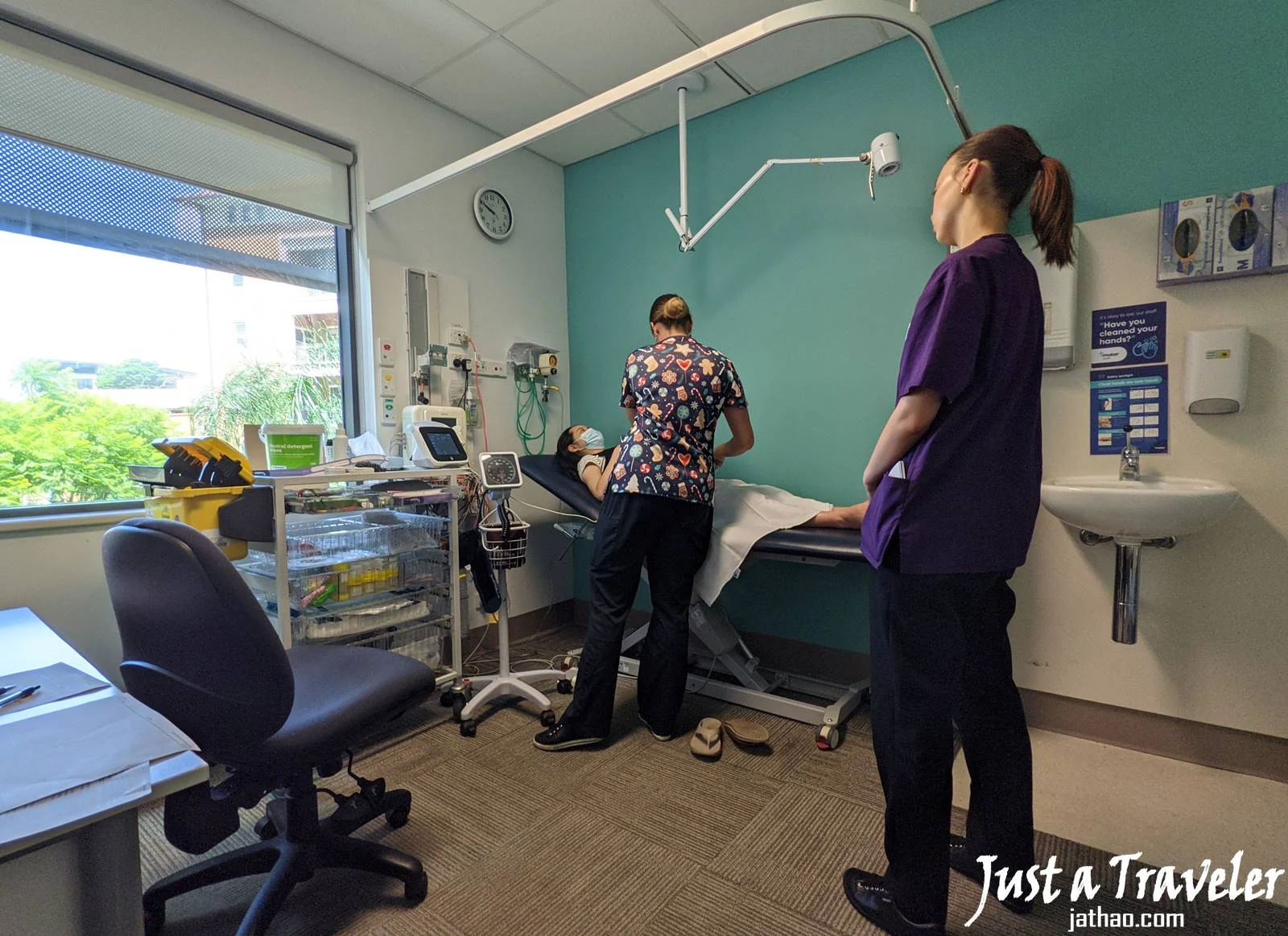
(During pregnancy, whenever real labor pains begin, head straight to Level 5 of Mater Mothers' Hospital—the Pregnancy Assessment Centre, or PAC (most maternity hospitals have an equivalent emergency triage unit). In early labor, you may be assessed and sent home to rest; only when you are in active labor will you be admitted to the birthing suites. Because we were undergoing medical induction, we remained admitted inside the hospital throughout.)

(The birthing suite was far more spacious than we imagined: a private room, ensuite bathroom, state-of-the-art medical equipment, and even a large birthing tub for water births—which requires pre-approval and extra screenings. Australian hospitals are wonderfully accommodating of your birth plan: lighting, music, entertainment, birthing positions, and partner support are all tailored to make the mother as comfortable as possible.)
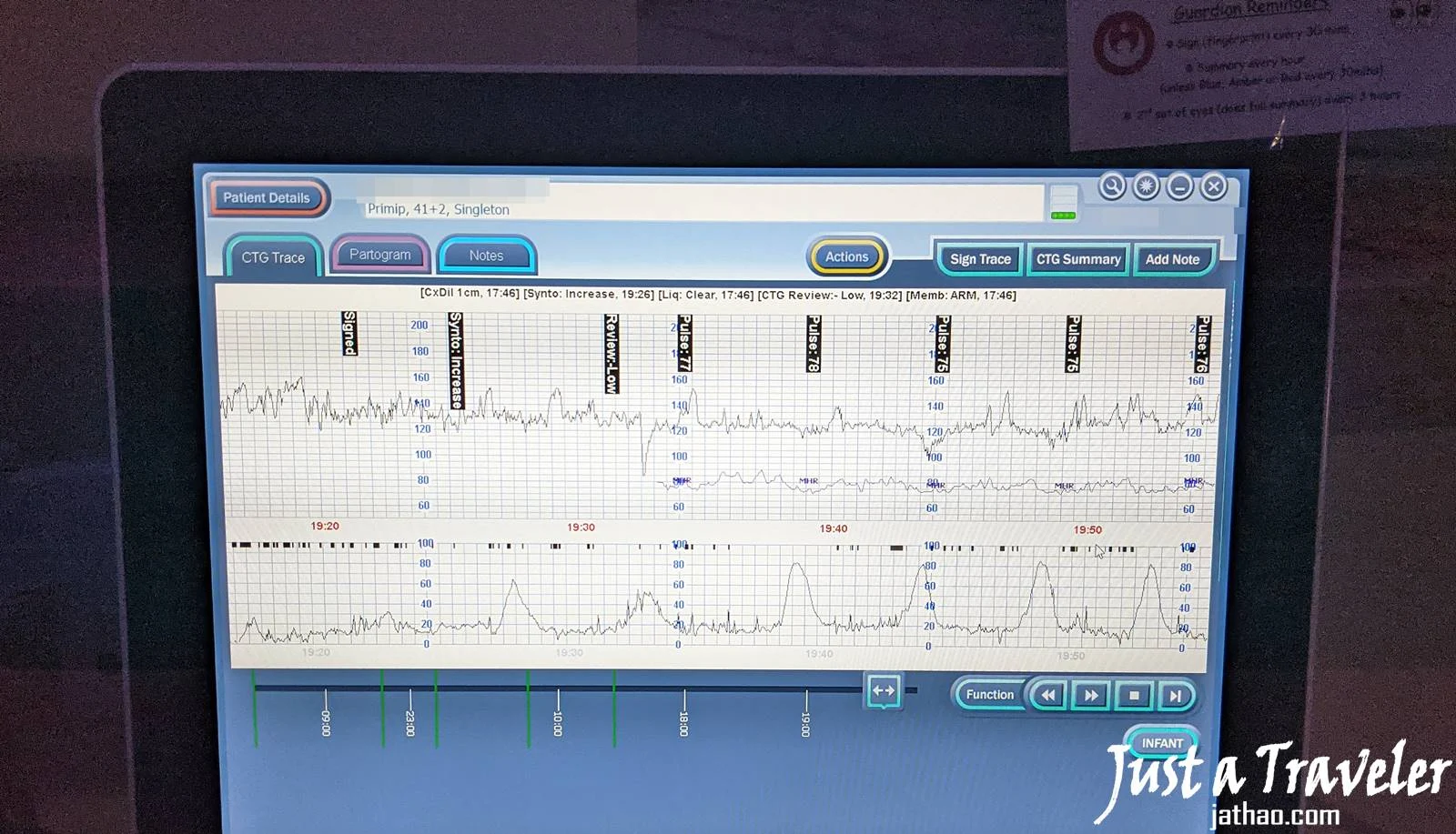

(Unlike the induction ward, the birthing suite features continuous CTG monitoring for fetal heart rate and maternal contractions. Crucially, a dedicated midwife stays by your side throughout the entire labor. Doctors step in immediately whenever anything irregular arises. Because public hospitals operate on shift rotations and our labor spanned roughly 24 hours, we were cared for by four different midwives, each as dedicated as the last.)

(As contraction frequency and intensity escalate, pain relief options include Nitrous Oxide (laughing gas) and an Epidural. After about 12 hours of labor, laughing gas wasn't enough to manage the pain, so we requested an epidural. The midwife remarked that my partner had an impressive pain tolerance, considering how intense the monitor showed the contractions to be!)

(During labor, if fetal monitor readings dip (such as temporary decelerations in heart rate), the lead midwife immediately alerts on-duty obstetricians and senior midwives. Within a minute or two, a team gathers in the room for a quick clinical review and risk assessment. Seeing the room suddenly fill up can be intimidating, but their promptness was incredibly reassuring, and thankfully everything stabilized.)

(Finally, the big moment arrived—the cervix reached full 10-centimeter dilation! The delivery team assembled to assist with pushing. However, our baby was not descending into the birth canal. After another hour of pushing, the doctors determined there was an escalating risk to the baby and advised switching to an emergency caesarean section. The obstetrician carefully explained the risks and options so we understood every detail.)


(Once classified as an emergency, the atmosphere shifted to high gear, which actually gave us immense confidence. The birthing suite was right next to the surgical theatre—we arrived in barely a minute. The anaesthetist, surgeons, and scrub nurses were fully prepped and briefed. Surgery commenced within two minutes of entering the theatre. Despite the urgency, the team remained calm, warm, and professional, constantly updating us and keeping us relaxed.)


(The caesarean delivery took only about 10 to 15 minutes before we heard our baby's first cry! The entire surgical team was wonderfully supportive, even capturing commemorative photos for us. While the surgeons completed the sutures, I joined the neonatal nurse at the examination cot to monitor our baby's vitals and initial immunizations. As soon as everything was stable, baby was placed directly into mum's arms.)

(In Australia, newborns stay with their mothers from the moment they are born rather than being whisked away to a nursery nursery nursery. Skin-to-skin contact is heavily prioritized for at least the first hour, which calms the newborn and kickstarts initial breastfeeding instincts—a distinctly baby-led, nurturing approach.)
4. Postnatal Stay & Discharge
Following delivery, you are moved to the postnatal ward. Public hospitals generally schedule a 1-to-3-day stay, though this can extend depending on the birth method and maternal recovery. Here is how our postnatal stay went:

(While the induction ward and birthing suites were private rooms, postnatal wards in public hospitals are generally shared two-bed rooms. This is one of the distinct differences compared to private hospitals, where private postnatal rooms and gourmet dining options are standard for optimal rest.)

(If there is one thing about the public hospital stay that felt less than ideal, it was the strict visiting hours for partners. Unlike labor and birth where partners can stay 24/7, postnatal shared wards restrict partner visits strictly to 6:00 AM – 8:00 PM. That means partners cannot stay overnight. Our baby arrived around 9:00 PM, past visiting hours, so I had to leave once mum was settled into the ward. Surviving the first night alone right after major surgery, managing feedings and infant care while completely exhausted, is tough on new mums—even with attentive ward midwives on call.)

(Generally, vaginal births are discharged within 24 hours (sometimes even within a few hours if mother and baby are thriving), whereas caesarean births require at least a three-day hospital stay. During this time, routine checks cover neonatal vitals, wound healing, blood tests, breastfeeding support, and physiotherapy guidance. While staying longer can feel tiring, the hands-on professional coaching is invaluable for first-time parents.)


(General visitors are welcome, but public hospitals limit visits to two guests at a time during designated visiting windows: 10:00 AM – 1:00 PM and 3:00 PM – 8:00 PM. The ward floor includes a shared lounge and dining space (no full commercial cafeteria), making it easy for family to drop off outside food or traditional postpartum soups. Mothers still enjoy unlimited, complimentary room service dining matching the induction ward menu.)

(On day two after birth, babies undergo standard jaundice testing. Our baby screened positive for elevated bilirubin levels, so phototherapy was initiated using a specialized light blanket. By that afternoon, bilirubin levels showed a healthy decline.)

(Just as we expected to be discharged on day three, morning tests showed the baby's jaundice levels had spiked again. The medical team escalated treatment to an intensive overhead phototherapy incubator. Because this equipment is large, the hospital transferred us into a private single room, granting mum a much quieter, more restful environment without shared ward roommates!)

(By day four, bilirubin counts were dropping nicely, but pediatricians advised an extra day of observation. Finally, on the morning of day five, all clinical indicators were cleared, and we completed our discharge. Counting the two days of pre-labor induction, our entire hospital stay totaled a full week. We joked that we truly made the absolute most of Australia's Medicare system!)


(One essential packing tip: bring plenty of newborn diapers, as public hospitals do not supply them. On the other hand, infant formula and single-use sterile bottles are freely provided, so there is no need to stress if breast milk has not come in yet. The hospital also gifts a generous bag of baby care samples, paperwork, and Queensland's essential Red Book (Personal Health Record, which varies by state). You must take this Red Book to every future GP visit and immunization appointment, so keep it safe!)
*Home visits after discharge: The hospital schedules midwife home visits on approximately Day 1, Day 4, and Day 15 post-discharge (dates are flexible based on your needs). They assess maternal recovery, weigh the baby, and provide feeding guidance right in your living room—an outstanding level of ongoing care. Additionally, for any infant medical concerns within the first six weeks, you can head directly to the Queensland Children's Hospital emergency department; for any maternal postpartum issues (such as wound complications), head straight back to Mater Mothers' Hospital PAC!
5. Final Thoughts
This was our first baby in Australia, and naturally we had our fair share of worries—especially hearing common stereotypes that public hospital care is inferior to private care. But after experiencing the complete journey firsthand (including the full gamut from induction and labor to emergency surgery and phototherapy), we have nothing but praise for Australia's public maternity system. Every doctor, midwife, and nurse we encountered was deeply knowledgeable, compassionate, and patient, consistently prioritizing maternal wellbeing and infant safety above all else. We are profoundly grateful to the entire medical team, and we would not hesitate to choose a public hospital again for baby number two. We hope sharing our experience helps expectant parents across Australia feel confident, informed, and excited to embark on their parenting adventure!