
Tokyo Car Rental | Complete Self-Drive Travel Guide
It is widely known that public transit in Tokyo, Japan is remarkably efficient, allowing you to easily reach countless city center attractions via subway and train networks. However, if you are planning to visit Tokyo's suburbs and surrounding prefectures, or simply wish to travel around with greater comfort, convenience, and even budget efficiency, renting a car in Tokyo is an exceptional choice that makes itinerary planning far more flexible.
In this guide, I will walk you through rental requirements, recommended car rental companies, rental costs, comparison websites, insurance options, Tokyo expressway tips, and essential driving rules to help make your Tokyo road trip completely seamless.
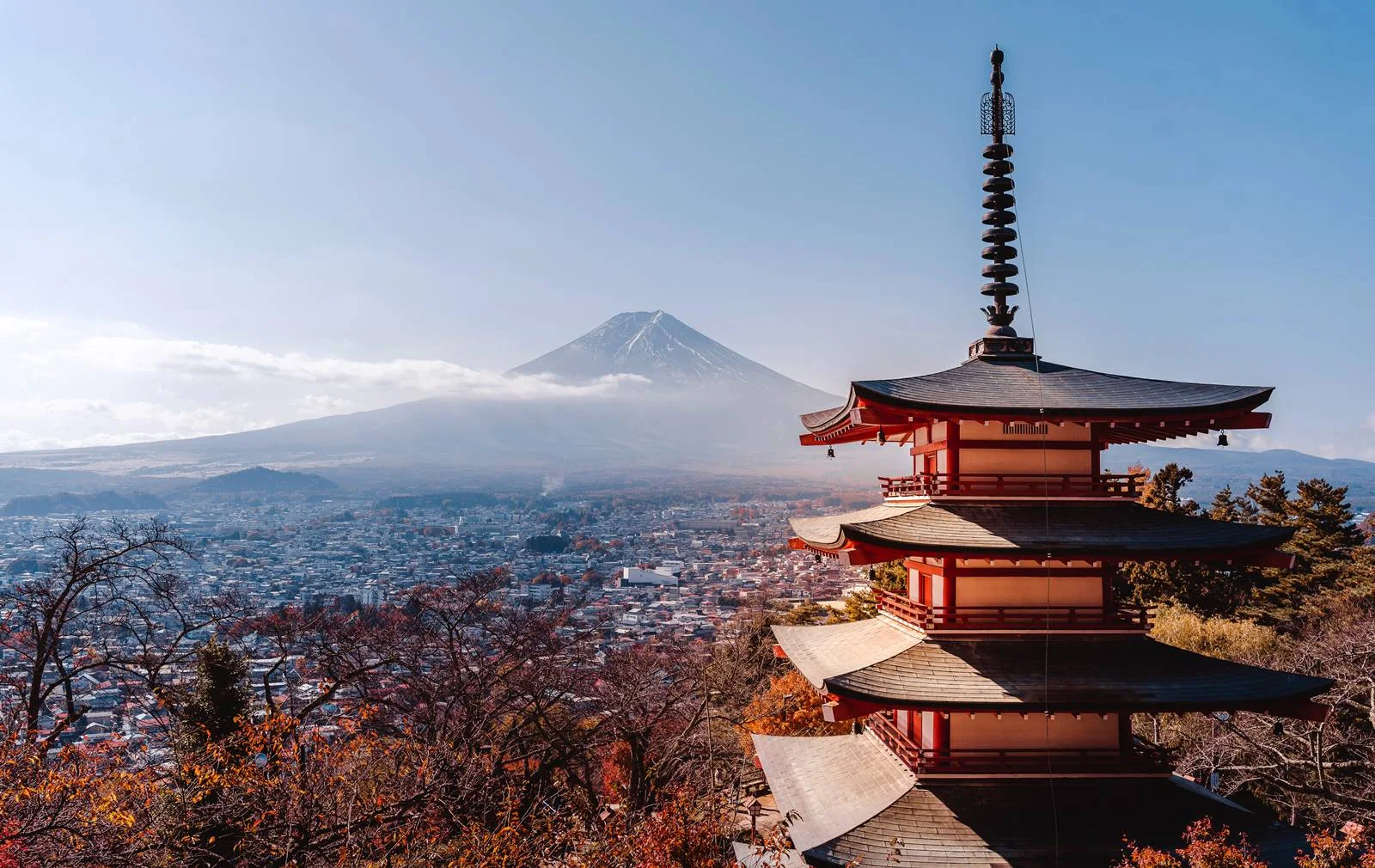
(Many travelers visiting Tokyo also venture out to Mount Fuji, Lake Kawaguchiko, Karuizawa, Hakone, Nikko, Ibaraki, or delve into the scenic countryside. Self-driving makes getting around remarkably convenient, eliminates the stress of crowded public transit, and makes exploring effortless for families traveling with elderly members or small children.)
1. Tokyo Car Rental Requirements
Renting a car in Tokyo is very straightforward. Because Taiwan and Japan mutually recognize valid driver's licenses accompanied by official translations, travelers holding a Taiwanese driver's license simply need to present their passport, original domestic driver's license, and an official Japanese translation of the license to rent a car within one year of entering Japan. If you booked online in advance, be sure to also bring your booking confirmation email and a valid credit card (under the primary driver's name).
For Taiwanese travelers applying for the official Japanese license translation, you can obtain it at any Motor Vehicles Office in Taiwan by presenting NT$100, your national ID card, and your original valid driver's license. Your original license must not be expired; if expired, renew it first (which requires one 1-inch photo).

(Some Tokyo car rental companies require drivers to be at least 21 years old or may charge a young driver surcharge.)
2. Tokyo Car Rental Companies Overview
There are numerous rental companies in Tokyo, including major nationwide chain brands such as Toyota, Nissan, Nippon, Times, and ORIX, as well as mid-sized or regional brands like Sky, Budget, NICONICO, JR RENT-A-CAR, and Japan C.R.C. (Campervans).
These major nationwide brands typically boast more branch locations (including dedicated airport counters), hassle-free pick-up and drop-off, longer operating hours, extensive coverage options, multilingual support, and reliable vehicle condition and service quality, making them the most recommended options. While there are dozens of smaller local rental shops throughout Tokyo and the Kanto region offering cheaper headline rates, they have far fewer branches, older fleets, and limited support—making them less ideal for international travelers.
Since most international visitors choose to pick up and drop off their rental vehicles at Tokyo's major gateways—Narita Airport (NRT) or Haneda Airport (HND)—the table below compares the 5 most popular car rental companies in Tokyo featuring airport service counters, covering service details and extra fees for easy reference:
| Company | Toyota | ORIX | Times | Nippon | Nissan |
| Multilingual Website | Yes | Yes | Yes | Yes | Yes |
| Multilingual Support | Yes | Yes | Yes | Yes | Yes |
| One-Way Drop-off | Fee based on distance | Fee based on distance | Free within 20 km | Free within 20 km | Free within 20 km |
| Tokyo Branches | 150 | 40 | 6 | 96 | 49 |
| Narita Airport Hours | 08:00 – 20:00 | 08:00 – 20:00 | 08:00 – 20:00 | 08:00 – 20:00 | 08:00 – 19:00 |
| Haneda Airport Hours | 08:00 – 20:00 | 08:00 – 20:00 | 09:00 – 19:30 | 07:00 – 22:00 | 08:00 – 22:00 |
| Child Safety Seat | 550 JPY | 1,100 JPY | 550 / 1,100 JPY | 1,100 JPY | 550 JPY |
| ETC Card Rental | 330 JPY | 330 JPY | 330 JPY | 330 / 1,100 JPY* | 330 JPY |
| Key Highlights | Largest fleet in Japan Extensive vehicle models Brand new cars Higher base rates Flawless service Budget-friendly insurance Available on booking platforms (e.g. KKday) |
2nd largest in Japan Lower base prices Affordable insurance 5% official site discount Generous promotions Shorter opening hours |
Foreign travelers cannot use JP site discount Moderate pricing |
3rd largest in Japan Slightly higher rates Member discounts Affordable insurance |
Fewer branches 10% Japanese site discount Budget-friendly rates Free ETC card promo Available on booking platforms (e.g. KKday) |
| Notes | ※ All companies provide multilingual GPS navigation systems free of charge. ※ Nippon's ETC card rental fee is 330 JPY for up to 7 days, and 1,100 JPY for 8 days or more. ※ At both Narita and Haneda airports, all companies listed above provide free airport shuttle transfers to/from their nearby rental lots (roughly 15–30 minutes drive). ※ Downtown Tokyo branches generally operate between 08:00/09:00 and 19:00/20:00. ※ One-way drop-off fees are calculated based on distance, but returning within the same prefecture is usually free (e.g., picking up at Haneda Airport and dropping off in central Tokyo incurs no one-way fee). ※ Some international brands partner with these domestic companies for counter check-in: Hertz/Thrifty share counters with Toyota; Europcar with Times; SIXT with ORIX; Alamo/Enterprise/National with Nippon. ※ Pros and cons are for reference and may vary by promotion, branch, season, or car category. |
||||
While all of these major car rental companies are highly reputable, Toyota and Nippon boast the largest network of branches across Tokyo and the Kanto region, providing maximum convenience for vehicle pick-up/drop-off, emergency assistance, communication, and vehicle selection. Child seat rentals are cheapest at Toyota and Nissan, while airport counter opening hours and ETC card rental fees are fairly similar across the board.

(Most international travelers land directly at Narita International Airport (NRT) or Haneda Airport (Tokyo International Airport; HND). Considering the hassle of luggage on return journeys, picking up and dropping off your car right at the airport is the most practical choice, and airport counter staff generally possess superior foreign language proficiency compared to downtown branches. In both Narita and Haneda airports, car rental service counters are clearly visible on the 1st floor arrival lobby—except Narita Terminal 3, which lacks counters—alongside tourist information centers ready to assist.)

(Naturally, picking up or returning your car elsewhere in Tokyo is entirely possible. Central hubs like Ueno, Shibuya, Shinjuku, Akihabara, and Tokyo Station all feature numerous rental branches, though you will need to navigate Tokyo's bustling public transit system to reach them.)
3. Tokyo Car Rental Costs and Price Comparison
After learning about the rental providers, the obvious question arises: which car rental company is the most affordable? Pricing structures vary by company, but the total rate basically consists of the base vehicle rental rate plus miscellaneous fees (taxes, one-way drop-off fees, optional accessories, etc.). Excluding insurance, standard compact sedans generally range between 7,000 and 12,000 JPY per day, while 7- to 8-seater minivans run around 20,000 to 25,000 JPY per day. Of course, vehicle category, peak vs. off-peak season, location, and rental duration all influence the daily average price (longer rental periods yield lower daily rates).
Additionally, car rentals in Tokyo are typically billed either on a 'Calendar Day' or 'Hourly' system. The hourly system charges based on 6-, 12-, or 24-hour blocks. The exact same timeframe may cost differently under each system, and hourly billing is often more cost-effective depending on your travel itinerary.
While you can check rates on each company's official website, using aggregate car rental comparison platforms in Tokyo is highly recommended to compare real-time prices across providers at a glance, often securing rates lower than official sites. Here are 5 top-recommended car rental comparison websites with comprehensive multilingual interfaces:
| Comparison Site | Overview |
| Rentalcars | The world's largest car rental comparison engine. Instantly compares rates from major rental brands across Tokyo. You can add full protection coverage directly at rates typically lower than car companies' counter insurance, plus free cancellation up to 48 hours before pick-up for complete peace of mind. |
| ToCoo! | One of Japan's largest domestic car rental booking portals. Its unique advantage is the ability to bundle optional gear such as ETC cards, Wi-Fi routers, and proprietary expressway passes, often yielding substantial savings. |
| Tabirai Japan (租車網.com) | A major domestic booking platform showcasing major and boutique Japanese rental brands. Features multi-language customer support and transparent pricing with comprehensive collision damage waiver included. |
| Klook Car Rental | A premier global booking platform for tours, tickets, and activities that also offers robust car rental price comparison. Easily search top Tokyo rental suppliers, and combine bookings with Klook promo codes for extra discount savings. |
| Tabirai | Another leading Japanese rental portal catering extensively to international travelers. Clean, intuitive layout, transparent pricing, and consistently competitive rates lower than official brand websites with CDW bundled into every rate. |

(As covered in my previous guides on Okinawa Car Rental, Hokkaido Car Rental, and Fukuoka Car Rental, no single company is guaranteed to always be the cheapest. Seasonal campaigns, booking windows, and car classes constantly shift prices—which is why comparison sites are essential for uncovering current best rates.)
4. Tokyo Car Rental Insurance Types and Rates
Car rental insurance in Japan is broadly divided into Mandatory Insurance and Optional Insurance. Mandatory insurance is known in Japan as the Insurance Compensation System (Hoken Hoshō Seido). Basic vehicle rental rates already include this baseline coverage. In the event of an accident, it covers major third-party bodily injury, property damage, and vehicle damage, leaving the driver responsible only for a minimum deductible known as the "Exemption Fee" (CDW Deductible / 自負額).
Optional insurance is commonly called the Collision Damage Waiver (CDW / 免責補償制度). Purchasing CDW specifically waives the out-of-pocket deductible fee mentioned above, eliminating your liability for damage to third parties, property, or the rental vehicle itself.
However, when an accident occurs, the car rental company also incurs business disruption losses because the vehicle must be cleaned, repaired, or towed. In such cases, the company will charge the driver a Non-Operation Charge (NOC / 營業損失賠償), usually set at 20,000 JPY (if driven back) to 50,000 JPY (if towed). Even with standard CDW, the driver must pay this NOC amount.
To eliminate this remaining risk, rental companies developed Rental Assistance Packages (RAP / 安心保險). While brand names differ, this package represents Full Comprehensive Protection (全險). It completely waives both CDW deductibles and the NOC fee, and typically bundles emergency roadside assistance, emergency refueling, tire puncture repairs, and towing.

(Comparison of Japanese Car Rental Insurance Tiers)
How much does insurance cost across Tokyo rental suppliers? Here is an overview of CDW and Full Protection package rates for the top 5 rental brands:
| Company | CDW Plan Name | CDW Cost | Full Plan Name | Full Plan Cost |
| Toyota | 免責補償制度 (CDW) | 1,100 / 2,200 JPY | 安心Wプラン (Anshin W) | 1,650 / 2,750 JPY |
| ORIX | 事故免責補償 (CDW) | 1,100 / 2,200 JPY | レンタカー安心パック (RAP) | 1,760 / 3,520 JPY |
| Times | Safety Package | 1,100 / 1,430 / 2,200 JPY | Super Safety Package | 2,200 / 2,530 / 3,300 JPY |
| Nippon | 免責補償制度 (CDW) | 1,100 / 1,430 / 2,200 JPY | Extra Coverage Option* | 1,540 / 1,870 / 2,640 JPY |
| Nissan | 免責補償制度 (CDW) | 1,650 / 2,200 / 2,750 JPY | 日産安心サポートプラン (NAS) | 2,200 / 2,750 / 3,300 JPY |
| Notes | ※ All CDW and Full Protection fees are tax-inclusive per 24-hour period. Tiered prices correspond to passenger cars, 7-seaters/minivans, and microbuses/cargo vans respectively. ※ Full Protection package prices reflect the combined total of "CDW" plus "NOC Waiver". ※ Nippon's Extra Coverage Option is the specific NOC waiver add-on (440 JPY), which must be paired with CDW to achieve full zero-liability coverage; the combined total is shown above. ※ Insurance is billed on 24-hour intervals (any partial period under 24 hours counts as a full day). |
|||
Looking at the breakdown, if you only purchase basic CDW, Toyota, ORIX, Times, and Nippon offer the cheapest rates for compact cars; when opting for full coverage (CDW + NOC Waiver), Toyota, ORIX, and Nippon offer the most economical rates for standard passenger cars.
Furthermore, if booking through third-party platforms like Rentalcars.com, third-party collision protection is often up to 40% cheaper than counter insurance. The only difference is that you settle any damages with the rental counter first and subsequently submit claims to the platform for reimbursement.

(All major Tokyo car rental companies offer comprehensive "Full Protection / RAP" packages bundling both base and optional coverages. I personally strongly recommend opting for full coverage: insurance exists precisely to safeguard against unforeseen contingencies, and having zero-deductible plus NOC waiver spares you countless headaches if anything unexpected happens.)
5. Tokyo Expressways & Toll Driving
Now that we have covered rental companies and policies, let's explore driving on Tokyo Expressways. Expressways in Japan are known as Jidōshadō (自動車道) or Yūryō Dōro (有料道路), which are tolled expressways.
How are tolls collected? Japanese expressway toll gates are divided into General Toll Lanes (一般 - Manual), Dedicated ETC Lanes (ETC専用), and Shared Lanes (一般 / ETC). If using a General Lane, take a paper toll ticket from the automated dispenser at the entrance, and when exiting, drive into a General Lane to hand the ticket to the attendant or insert it into the machine to pay (cash or credit card accepted). If you rent an ETC card from your rental provider, you can breeze through ETC or shared lanes at speeds under 20 km/h without stopping. The tolls are automatically recorded, and you settle the bill when returning the vehicle. It saves immense time and stress, so adding an ETC card rental is wholeheartedly recommended.

(Expressway toll plazas in Tokyo clearly display lane signage for General [一般], ETC Dedicated [ETC専用], and Shared lanes.)
Unlike other regions in Japan (such as Kyushu, Hokkaido, Shikoku, or Tohoku), the Kanto region around Tokyo does not currently offer an unlimited "Expressway Pass" for foreign tourists, which is something to keep in mind for budgeting. If you want to estimate your toll expenses in advance, check the NEXCO Central Japan Highway Toll Calculator.

(A reference list of common Japanese traffic road signs encountered while self-driving in Tokyo)

(Speed limits on Kanto expressways are typically 100 km/h for standard passenger cars and 80 km/h for Kei cars, while urban streets generally have limits of 30 to 50 km/h, though limits vary depending on road conditions, terrain, and weather.)
6. Important Driving Tips & Reminders
- Most Tokyo car rental contracts follow a "full-to-full" fuel policy. Always keep your final gas station receipt when returning the car.
- Japanese road law mandates that children under 6 years old must use a certified child safety seat; failing to comply incurs legal penalties.
- Japanese cars tend to have more compact luggage boots. If your passenger count matches vehicle capacity, consider upsizing (e.g., choose a 7-seater for 5 passengers, or a 9-seater for 7 passengers) so your suitcases fit comfortably.
- In the event of any collision or scratch, you must call the police immediately and notify the rental company. Without an official police accident report (事故証明書), your rental insurance is void (Japan's emergency numbers are 110 for police and 119 for ambulance/fire, the same as Taiwan).
- Returning your vehicle outside regular operating hours (such as early-morning red-eye flights) is often possible, but rental companies usually assess an off-hours surcharge of roughly 1,100 to 2,200 JPY.
- If you plan to have additional drivers take the wheel, all drivers must present their licenses and translation/IDP documents during pick-up; otherwise, insurance coverage will not apply to accidents caused by unlisted drivers.
- Japan strictly enforces pedestrian priority. Always bring your vehicle to a complete stop and yield whenever pedestrians are crossing.
- Japan is a left-hand traffic (right-hand drive) country. Many rental locations have spacious parking or quiet side alleys; if you are unfamiliar with right-hand drive, take a few minutes to practice steering and turn indicators before heading onto busy arterial roads.

(Beyond downtown Tokyo attractions, the surrounding regions are packed with spectacular road-trip destinations, such as Mount Fuji, Lake Kawaguchiko, Karuizawa, Hakone, and Lake Yamanakako. Exploring these by car saves considerable travel time and transit fares.)

(In downtown Tokyo, snow is rare in winter, and snowfall rarely lasts long when it does occur. However, if your itinerary takes you into mountainous regions during winter or unseasonal snow is forecasted, always inform your rental company in advance to request studless snow tires or snow chains for peace of mind.)

(Many gas stations in Japan operate on a self-service basis [セルフ]. Park by the pump, select your fuel type on the touch screen [standard gasoline cars almost always use 'Regular' / レギュラー], specify amount or full tank, insert cash or credit card, pump the gas, and collect your receipt and change. Rental cars frequently feature a color-coded sticker inside the fuel door matching the red Regular pump handle, making fueling practically foolproof.)

(Typical car rental workflow: Take airport shuttle (if applicable) → Complete rental contract at counter → Inspect vehicle condition together (including navigation, child seats, etc.) → Familiarize yourself with controls (accelerator, brake, wiper vs. indicator stalks) → Hit the road → Enjoy your vacation → Refuel full tank → Complete drop-off inspection → Board shuttle back to airport terminal.)
That wraps up my comprehensive guide to renting a car in Tokyo! There is so much to explore throughout Tokyo and the wider Kanto region. A rental car unlocks tremendous itinerary flexibility, saves travel costs for groups, and makes your independent journey in Japan effortless and memorable!