
UK Car Rental | Road Trip Guide
The United Kingdom is packed with incredible attractions, many of which are tucked away in picturesque countryside regions. However, once you venture beyond the major cities, public transit becomes far less convenient. That is why renting a car for a road trip is one of the most rewarding ways to travel—it gives you total flexibility to explore at your own pace, and if you are traveling with family or friends, it can often be quite cost-effective.
In this guide, I have put together everything you need to know about UK car rental requirements, rental company recommendations, pricing, price comparison platforms, insurance coverage, and essential driving tips to help make your British road trip smooth and hassle-free.

1. What Documents Do You Need to Rent a Car?
To rent a car in the UK, you generally need to be at least 21 years old and have held a valid driver's license for at least one year. At the rental counter, you must present your passport, domestic driver's license, and an International Driving Permit (IDP) or certified translation. You cannot simply present an IDP alone. Furthermore, while licenses from places like Hong Kong are often accepted directly due to English text, some rental providers still ask for an IDP, so carrying one as a backup is always recommended.

(UK rental agencies impose strict criteria on younger motorists. Drivers aged 21–25 are usually subject to a daily young driver surcharge, which is why some companies choose to set their minimum rental age at 25 outright.)
2. Overview of UK Car Rental Companies
There are numerous rental brands operating across Britain, largely falling into two main categories:
- International chains: Such as Hertz, Budget, Avis, Europcar, National, Thrifty, Enterprise, and SIXT.
- UK domestic companies: Such as Green Motion, Easirent, Nationwide, Arnold Clark, and Practical.
The primary difference is that international brands typically offer extensive branch networks (including on-site airport counters), convenient pick-up and drop-off, longer opening hours, better roadside protection, and higher vehicle/service standards. On the other hand, domestic brands tend to be cheaper, but they have fewer depots (rarely inside airport terminals), older fleets, and comparatively lower service consistency.
Because most overseas travelers prefer picking up their vehicle right after landing, here is an overview of car rental providers across three major UK airports:
| Airport | London Heathrow | London Gatwick | Manchester |
| Car Rental Companies | Europcar Budget National Enterprise Hertz Avis Alamo Sixt |
Europcar Budget National Enterprise Hertz Avis Alamo Sixt Dollar Drivalia Thrifty* |
Europcar Budget National Enterprise Hertz Avis Alamo Sixt |
| Desk Location | Airport Map | North Terminal South Terminal* |
Airport Map |
| Notes | 1. London Gatwick is split into North and South Terminals. Car rental desks at the South Terminal are located just across from the airport train station rather than inside the main building, but are easily reachable on foot. Note that Thrifty is only at the South Terminal and situated away from the main cluster, requiring about 10 minutes of extra walking. 2. Airport branch operating hours usually run from around 5:00 AM until midnight or 1:00 AM. 3. The vast majority of companies accommodate out-of-hours drop-offs, though some apply an additional fee. |
||
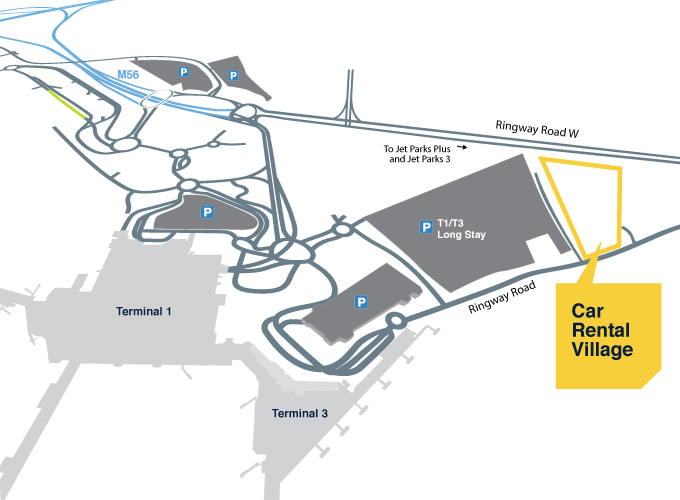
As shown above, almost all brands with counters directly inside airport terminals are major international chains. Local budget brands like Green Motion or Easirent maintain off-site branches nearby, requiring you to arrange your own shuttle or drive 10–20 minutes away—a key trade-off in convenience.
Picking up or returning a car at downtown city branches is also possible, but keep in mind that many city depots are not conveniently located near transit hubs, meaning extra planning is required to get there.
So, which car rental company is the best and most reliable? The respected UK consumer watchdog platform Which? evaluates major car rental providers across the UK and US based on customer satisfaction, pricing transparency, value for money, and description accuracy:
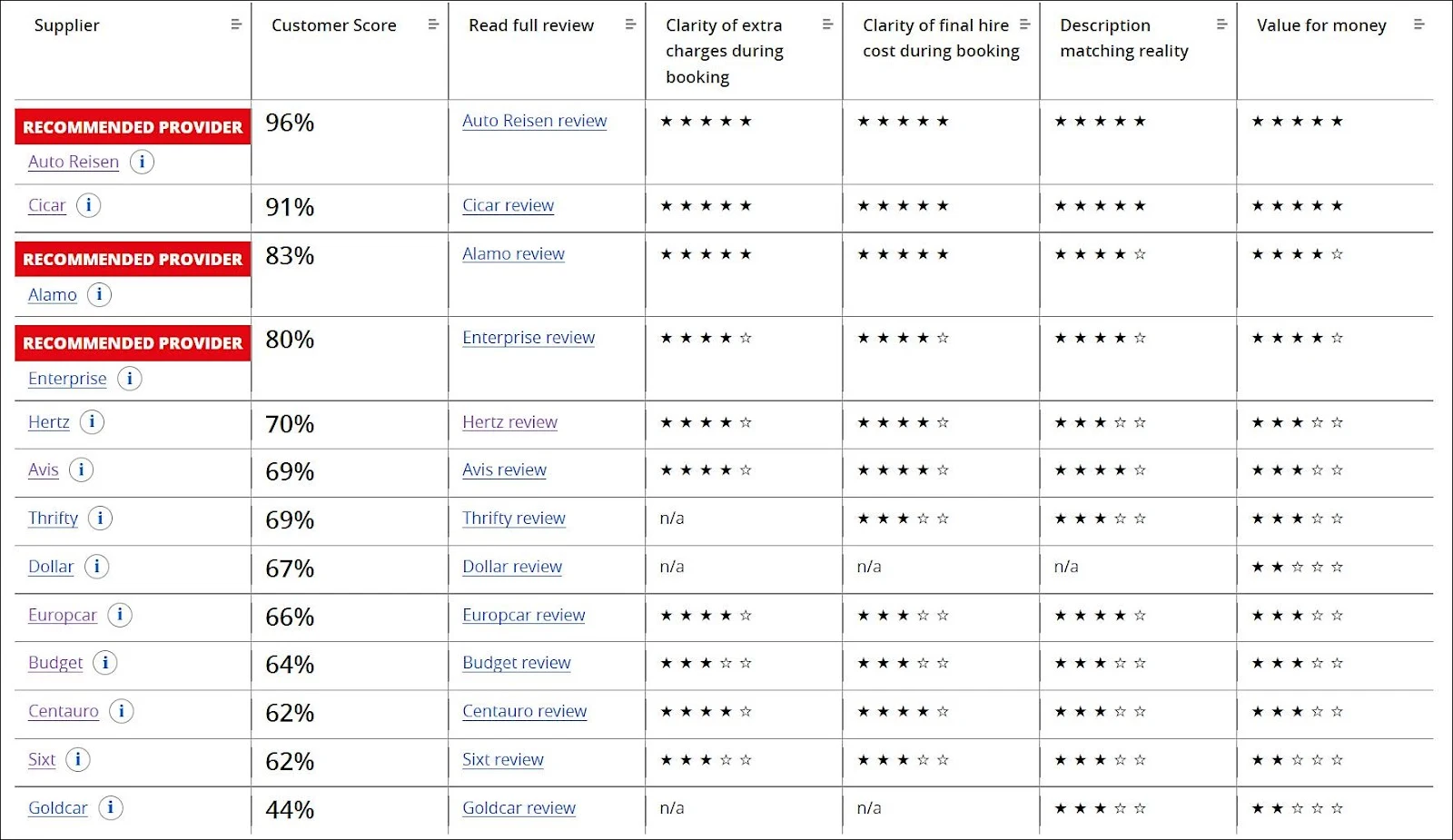
(As the survey highlights, Enterprise and Alamo earn the highest overall scores and come highly recommended. Furthermore, on the major UK review platform Trustpilot, while nearly every rental brand receives some complaints, Enterprise, Alamo, and Europcar maintain relatively higher ratings, making them solid reference points.)
3. Rental Rates and Price Comparison
After surveying the rental brands, the next question is naturally: which company offers the best rates?
Pricing structures vary between companies, but generally consist of the base daily rate plus ancillary fees such as administrative charges, taxes, cross-border fees, or premium pick-up location surcharges. Excluding insurance, average rates run roughly £50–£85 per day for a standard sedan and £220–£270 per day for a 7-seater passenger van. Naturally, vehicle category, peak vs. off-peak season, and total duration all influence the daily rate (longer rentals yield lower average daily costs).
Furthermore, car rentals in the UK operate on a 24-hour daily cycle. For example, if your rental starts at 8:00 AM on Day 1 and you return the vehicle before 8:00 AM on Day 3, you are billed for two days. However, returning at 9:00 AM on Day 3—even just one hour later—triggers a third full day's charge, so keep this in mind when planning your itinerary.
While you can check rates individually on each company's official site, I strongly recommend using comparison platforms like Rentalcars.com (Booking.com Group) or DiscoverCars. They aggregate options across all major suppliers, frequently beat direct official prices, feature multi-language interfaces, and save you considerable time and money.

(Platforms like Rentalcars.com and DiscoverCars compare international and local agencies side by side. Their interfaces clearly display pick-up locations, itemized costs, and grand totals, and many bookings include free cancellation, making them exceptionally convenient.)
4. UK Car Rental Insurance: Coverage and Costs
Car rentals in the UK standardly include Third-Party Liability (TPL/LIS), Collision Damage Waiver (CDW), and Theft Protection (TP). As the names imply, these cover liability for injury or property damage to third parties as well as vehicle collision and theft (typically excluding glass, tires, roof, undercarriage, and personal belongings inside).
CDW and Theft Protection generally carry an excess (deductible). This means if damage occurs beyond covered boundaries, the rental company can charge you up to a specified cap, usually ranging between £1,200 and £1,500 depending on vehicle class and supplier, along with administrative or assessment charges.
Beyond basic coverage, you can purchase supplemental protection including Personal Accident Insurance (PAI), tire and windshield protection, roadside assistance/towing, excess reduction, and full excess waiver (Comprehensive Cover). These can be added online beforehand or at the counter, though counter rates are invariably steeper.
Additionally, purchasing full coverage through comparison sites is often significantly cheaper than counter rates. The only difference is that in an incident, you settle costs with the rental company first and then file a claim with the platform. You can also purchase standalone car rental excess insurance from third-party specialists such as RentalCover at competitive rates.

(UK rental suppliers offer "All-inclusive / Zero Excess" comprehensive packages that bundle basic and supplemental coverages. This is my personal recommendation: insurance is there for peace of mind, and handling incident claims while traveling can be a major headache. Comprehensive coverage simplifies everything, reducing your deductible right down to zero.)
5. Important Driving & Rental Tips
- Most UK car rental agencies support one-way rentals, but may assess a one-way drop-off fee ("one-way surcharge") of approximately £60–£80.
- Children under 12 years old or under 135 cm in height must use an approved child safety seat; failing to comply carries severe fines.
- Driving into central London incurs the "Congestion Charge" of £15 per day. Payment must be made on the day of travel; late payments trigger doubled charges, and unpaid fees result in a £130 penalty fine. Check the exact charging zones on the official website.
- A credit card in the primary driver's name is required at pick-up for the security deposit. This covers potential excess deductibles or road tolls. The deposit amount depends on the vehicle and your insurance level: opting for full comprehensive cover usually reduces the deposit significantly or waives it entirely, whereas basic insurance requires a larger authorization hold.
- Some rental contracts impose mileage limits; exceeding the agreed allowance will incur extra per-mile fees.
- The vast majority of British motorways are toll-free, with only a few specific "Toll Roads" (such as the M6 Toll or certain crossings). Check route maps and fees on the UK Government website.
- The UK measures speed and distance in miles (1 mile ≈ 1.6 km). Motorway speed limits are 70 mph (approx. 110 km/h), while standard urban limits are 30 mph (approx. 50 km/h).
- In my experience, there is no need to pay extra for a rental GPS unit (many cars have built-in navigation anyway). Google Maps on your smartphone works flawlessly; simply download offline maps in advance in case of patchy mobile reception.
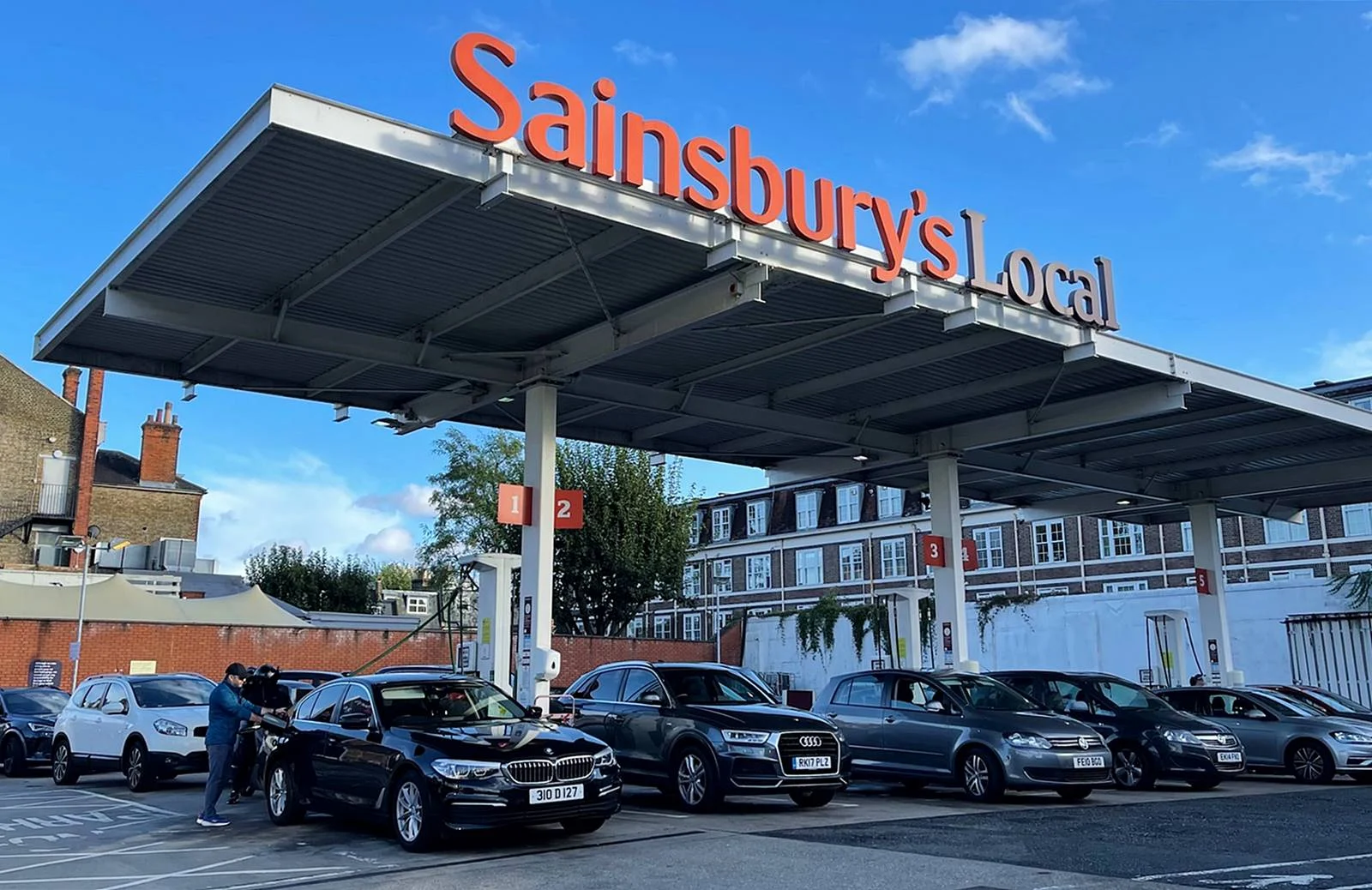
(The UK drives on the left. Petrol stations are almost exclusively self-service: simply pull up to an available pump, select the correct fuel nozzle, fuel up, note your pump number, and pay at the cashier desk inside.)
That concludes my guide to renting a car in the UK! Britain is home to so many fascinating destinations—from London and Birmingham to Glasgow, Manchester, and Edinburgh. Driving gives you unmatched flexibility to get off the beaten track and experience the very best of the UK!