
Kyushu, Japan | JR PASS Complete Guide
When traveling in Kyushu, aside from renting a car and driving, the most popular way to get around is by JR train. Not only does it connect all major cities across Kyushu, but it also features a wonderful variety of D&S (Design & Story) scenic trains. Furthermore, taking JR trains in Kyushu is remarkably cost-effective thanks to several great value passes, with the JR Kyushu Rail Pass being the top choice for international travelers.
Today, I will introduce the JR Kyushu railway network and provide a breakdown of the 4 major discount rail passes: the All Kyushu Area Pass, Northern Kyushu Area Pass, Southern Kyushu Area Pass, and the Fukuoka Wide Area Pass. Hopefully, this guide will help you easily plan your itinerary and explore Kyushu while saving money!

◎ Introduction to JR Kyushu Basics
As mentioned in my previous JR West Overview Guide, "JR" stands for Japan Railways, a nationwide train network operated independently by six passenger rail companies. In Kyushu, it is operated by JR Kyushu.
To navigate any railway system, you essentially only need three things: fares, timetables, and route maps—and JR Kyushu provides all of them online!
◎ Route Map: JR Kyushu Complete Route Map
◎ Fares: JR Kyushu Fare Search System
◎ Timetables: Major Train Timetables | Timetable Search System
Generally, base fares start around 170 yen and scale up depending on travel distance, train type (express/bullet), and seat selection, easily exceeding 10,000 yen for long journeys. Therefore, if you plan to travel via JR trains for several consecutive days, getting a JR Kyushu Rail Pass is usually far more economical, as detailed below.

One important point to keep in mind is that lines not operated by JR Kyushu cannot be ridden using JR Kyushu tickets or rail passes. As shown on the comprehensive map, certain routes belong to other companies, such as local private railways (Minamiaso Railway, Matsuura Railway, etc.) and the Shinkansen between Kokura and Hakata (which belongs to JR West's Sanyo Shinkansen). You cannot use JR Kyushu passes on these services.
A distinctive highlight of Kyushu's rail system is its famous fleet of D&S (Design & Story) sightseeing trains. These are regular JR Kyushu services sharing the same rail network with no special operational rules—they are simply beautifully and uniquely designed!
Lastly, while most tracks operate normally, a few isolated sections experienced long-term suspensions or service adjustments due to historical natural events like the Kumamoto earthquake. For recent route statuses, please consult Lines Affected by Natural Disasters.
◎ Overview of the 4 JR Kyushu Rail Passes
Now that you know the basics of JR Kyushu, let's look at the 4 major discount rail passes available:
1. JR Northern Kyushu Area Pass
Unlimited rides on JR local, rapid, and limited express trains, as well as the Kyushu Shinkansen (Hakata to Kumamoto) and Nishi-Kyushu Shinkansen (Nagasaki to Takeo-Onsen) within the area north of Kumamoto and Oita for 3 or 5 consecutive days.
◎ Price: 3-day pass: 15,000 yen; 5-day pass: 17,000 yen (Children aged 6–11 pay half price)
◎ Booking Tip: You can purchase online via platforms like Klook (Northern Kyushu JR Pass) or KKday (Northern Kyushu JR Pass) to save on-site purchase time and often enjoy promotional discounts.
◎ Sales Locations in Japan: Hakata, Kokura, Mojiko, Saga, Nagasaki, Sasebo, Beppu, Oita, Kumamoto

For travelers focusing solely on northern Kyushu, this pass is the absolute best choice. It covers Hakata, Mojiko, Nagasaki, Beppu, Yufuin, and Kumamoto, and gives you access to popular sightseeing trains such as the Huis Ten Bosch express, Yufuin no Mori, and Aso Boy! Unless your trip is very short, the 5-day version offers outstanding value!
2. JR Southern Kyushu Area Pass
Unlimited rides on JR local, rapid, and limited express trains, plus the Kyushu Shinkansen (Kumamoto to Kagoshima-Chuo) within the area south of Kumamoto and Nobeoka for 3 consecutive days.
◎ Price: 12,000 yen (No 5-day version; children aged 6–11 pay half price)
◎ Booking Tip: Available via travel platforms like Klook (Southern Kyushu JR Pass) or KKday (Southern Kyushu JR Pass) for convenient booking and discount rates.
◎ Sales Locations in Japan: Kumamoto, Oita, Kagoshima-Chuo, Miyazaki, Miyazaki Airport

Similar to the Northern pass, if your trip focuses on the south, this pass is highly recommended. It lets you explore Kumamoto, Kagoshima, Ibusuki, and Miyazaki, while riding scenic sightseeing trains like the SL Hitoyoshi (seasonal), Ibusuki no Tamatebako, and Hayato no Kaze (or its successor trains). Since it only comes in a 3-day duration, make sure to plan your transit schedule carefully.
3. JR All Kyushu Area Pass
Unlimited rides on JR local, rapid, and limited express trains, as well as the Kyushu Shinkansen (Hakata to Kagoshima-Chuo) and Nishi-Kyushu Shinkansen (Nagasaki to Takeo-Onsen) across the entire Kyushu region for 3, 5, or 7 consecutive days.
◎ Price: 3-day: 22,000 yen; 5-day: 24,000 yen; 7-day: 26,000 yen (Children aged 6–11 pay half price)
◎ Booking Tip: You can purchase through Klook (All Kyushu JR Pass) or KKday (All Kyushu JR Pass) for customer support and special offers.
◎ Sales Locations in Japan: Hakata, Kokura, Mojiko, Saga, Nagasaki, Sasebo, Beppu, Oita, Kumamoto, Kagoshima-Chuo, Miyazaki, Miyazaki Airport

The All Kyushu Pass offers the broadest coverage and maximum total value among all passes. However, in practice, it is often harder to maximize than the Northern or Southern regional passes because covering the entire island in 3 to 7 days can involve heavy transit. It is best suited for travelers planning multi-city journeys bridging both north and south Kyushu.
4. JR Kyushu Rail Pass (Fukuoka Wide Area Pass)
Unlimited rides on JR local, rapid, and non-reserved seats of limited express trains between Karatsu, Omuta, and Mojiko for 2 consecutive days (Shinkansen and reserved seats are excluded).
◎ Price: 3,500 yen (Children aged 6–11 pay half price)
◎ Sales Locations in Japan: Hakata, Kokura, Mojiko, JTB Fukuoka International Airport Counter

This pass is much cheaper but limited in scope, as it covers only non-reserved seats (Free Seating). For instance, although the famous Yufuin no Mori train travels through this zone, it is an all-reserved seating train, meaning this pass cannot be used on it. It is ideal for travelers taking multiple short-distance day trips around Fukuoka city over two days.
In addition to the 4 passes issued by JR Kyushu, there is also the Sanyo-San'in Northern Kyushu Area Pass issued by JR West. This covers Northern Kyushu all the way into the Kansai region. However, unless you are making a massive cross-regional overland trek across western Japan, it is rarely necessary for a standard Kyushu holiday. For details, see my JR West Guide.
◎ Important Rules for JR Kyushu Rail Passes
1. Passes purchased outside Japan (via travel websites or travel agencies) are issued as Exchange Orders (vouchers), which must be exchanged for the physical rail pass at designated JR Kyushu stations or exchange counters.
2. You must exchange your voucher in Japan within 3 months from the date of issue. When exchanging, you must designate your pass's starting date (it does not have to be the exchange date itself).
3. Reserved seats can be booked up to 1 month in advance via the official JR Kyushu website (step-by-step tutorial here). Online reservations incur a fee of 1,000 yen (1,500 yen for special sightseeing trains; half price for children). Reserving seats in person at ticket counters in Japan is free.
4. The Fukuoka Wide Area Pass only covers non-reserved seating, so seat reservations do not apply.
5. Passes cannot be used on non-JR lines, such as private railways (e.g., Nishitetsu), local city buses, or the Sanyo Shinkansen between Kokura and Hakata (operated by JR West).
6. Passes cover non-reserved, standard, and reserved seats, but the number of free seat reservations is capped (except on the All Kyushu Pass). Northern and Southern Kyushu Passes include up to 6 complimentary seat reservations; additional reservations require extra fees. Green Car (first-class) seats always require separate additional payment.
7. Presenting your JR Kyushu Rail Pass grants discounts and perks at various partner attractions and stores; check the official perks list for details.
8. You must present your original passport with the "Temporary Visitor" entry stamp or sticker when buying or exchanging your pass in Kyushu.
9. Passes bought via Klook provide an eMCO code that allows online seat reservation in advance (reservation fee applies). Passes purchased via KKday currently do not provide an eMCO code for online seat booking.
10. Whether purchased through the JR Kyushu Rail Pass Online Booking system or at a station counter, passes can be refunded prior to the designated start date at the same system or ticket office, subject to a 10% processing fee.
11. If traveling without a rail pass, riding the Shinkansen or Limited Express trains requires purchasing both a base fare ticket and a limited express ticket (available as reserved or non-reserved).
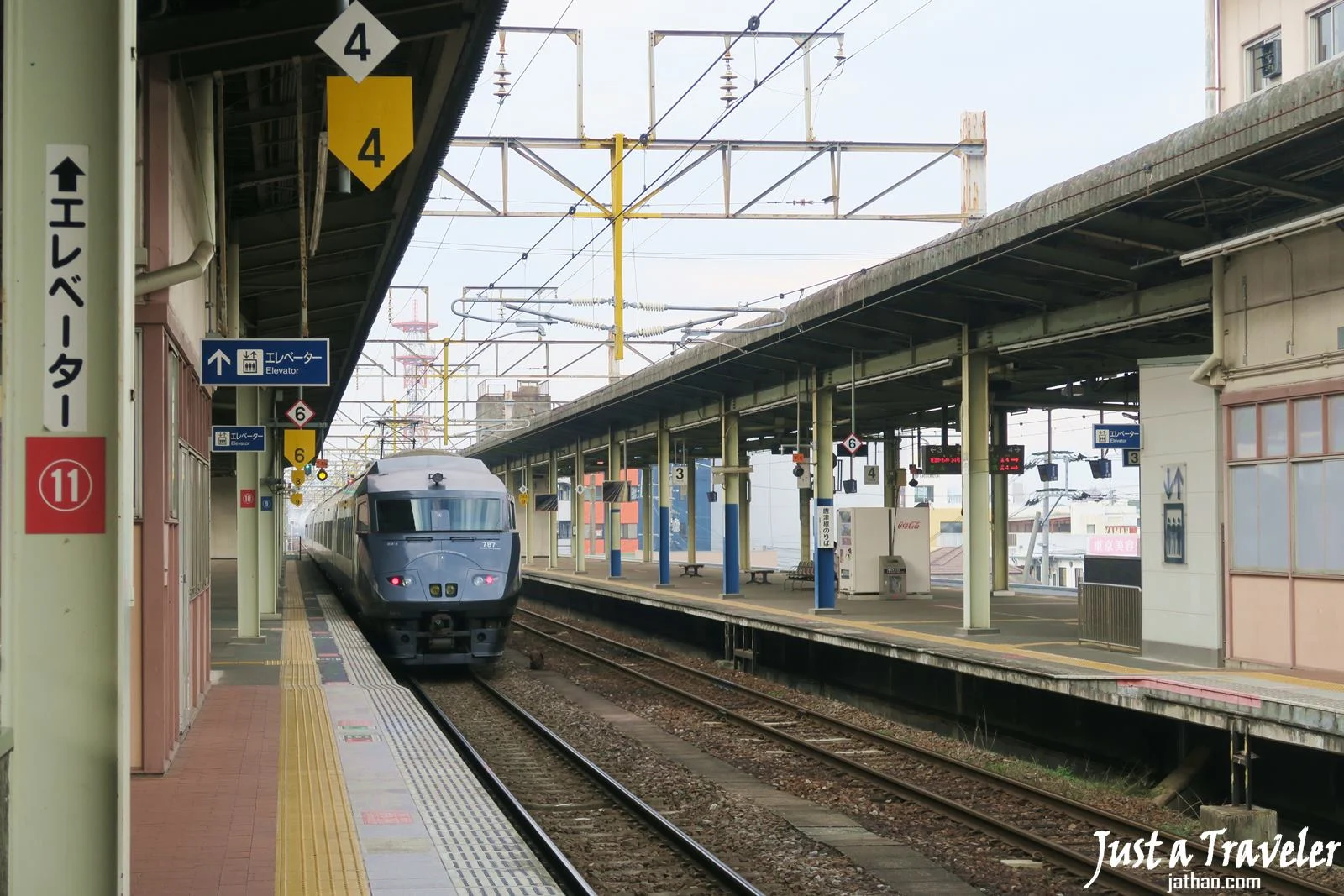
◎ How to Use the JR Kyushu Rail Pass (Step-by-Step)
Since Hakata Station is the primary transport hub closest to Fukuoka Airport, most visitors either purchase or exchange their JR Kyushu Rail Pass right at Hakata Station.
Here is a step-by-step walkthrough at Hakata Station covering ticket purchase, voucher exchange, seat reservations, and passing through the gates.

(Hakata Station is a combined hub for subway lines, Shinkansen, and JR lines with multiple Midori-no-Madoguchi ticket offices. Along the ground-floor central concourse, there are two ticket offices, but only one features dedicated foreign traveler counters for JR Kyushu Pass sales and exchanges.)

(The Midori-no-Madoguchi ticket office is marked by prominent green signage. Directional signs in Hakata Station also feature English, so head toward the Central Concourse Ticket Office signs on the 1st floor.)


(Inside, the service area is divided into sections. Counter 1 is the dedicated desk where international visitors can purchase and exchange JR Kyushu passes. Similar international counters exist at other major stations across Kyushu.)

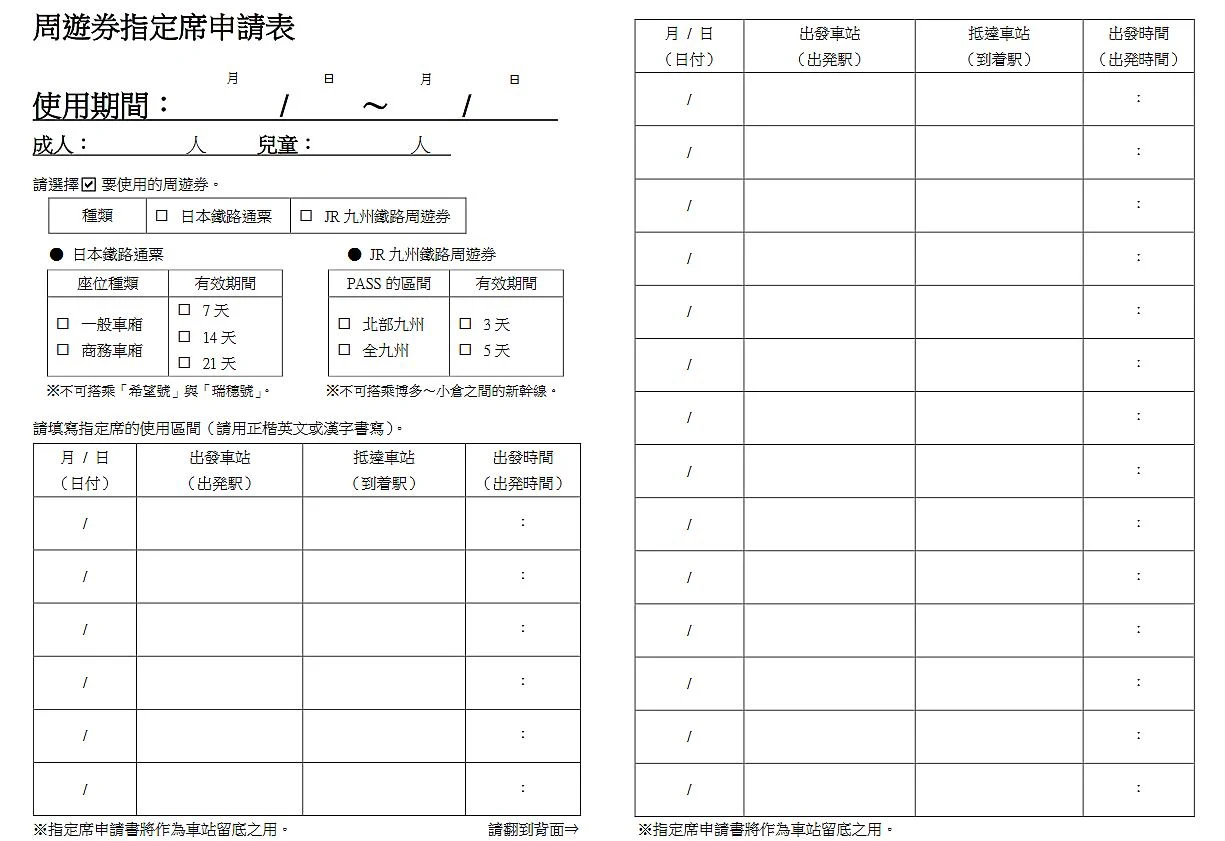
(When purchasing a JR Kyushu Rail Pass on-site, you need to fill out two forms: the Pass Application Form and the Reserved Seat Application Form. The Pass Application is used to select your pass type, such as All Kyushu or Northern Kyushu—note that Southern Kyushu passes cannot be bought at Hakata. The Reserved Seat form is used if you wish to reserve specific train seats on the spot.)

(Once payment or voucher verification is complete, you will receive your magnetic JR Kyushu Rail Pass card. If you booked reserved seats, you will also receive separate seat assignment tickets.)


(To board, simply insert your magnetic pass into the automated ticket barrier and take it as it pops out. Do not insert your reserved seat ticket into the gate—carry it with you for conductor inspection onboard.)
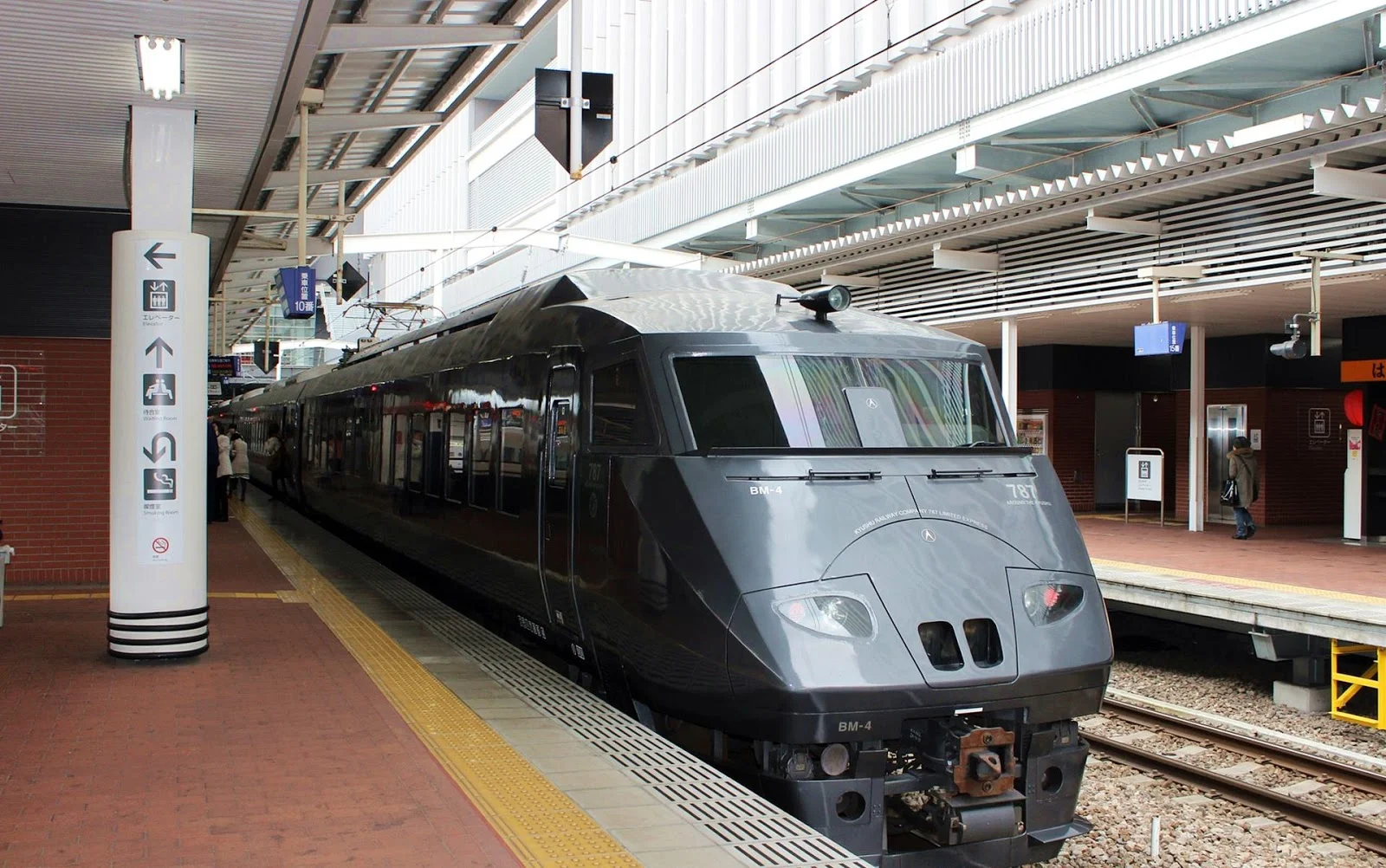
(Head up to your designated platform and board the train! If you booked a reserved seat, head to your assigned car and seat. If not, make sure to sit in a designated non-reserved car.)
That concludes this comprehensive guide to JR travel and the JR Kyushu Rail Pass! Train travel in Kyushu is smooth, comfortable, and scenic, making it a must for almost every independent traveler. Leveraging the right rail pass is by far the smartest way to tour Kyushu on a budget, giving you unforgettable rail adventures across the island!