
OTS Car Rental in Okinawa | A Complete Self-Drive Road Trip Guide
Okinawa is easily one of the best destinations in Japan for a self-drive road trip. Among numerous rental companies, OTS is widely recommended online. I have personally used car rentals in Okinawa twice now, choosing OTS on both occasions. Not only do they frequently offer competitive promotions, but the entire pickup and drop-off process has been exceptionally smooth.
In this post, I will share my OTS car rental experience and a complete walkthrough of driving in Okinawa, covering everything from the free airport shuttle and vehicle pickup to returning the car. Regardless of which company you choose, the general procedures are quite similar, so this guide should give anyone planning an Okinawa road trip a clear, practical idea of what to expect.

1. Airport Shuttle Service

(None of the rental car companies in Okinawa have service desks inside the airport terminal, but larger providers like OTS offer free shuttle buses. Whether you land at the International or Domestic Terminal, the shuttle pickup zones are located along the long passenger shelters across from the terminal exits. Staff from each rental agency hold name signs so travelers can easily identify them. The walk between the International and Domestic terminals takes just 5 minutes, so it is very close. For more terminal photos and navigation tips, check out my Naha Airport guide.)

(OTS typically boards passengers outside the International Terminal, which is extra convenient compared to companies that only pick up outside the Domestic Terminal, saving both time and walking distance. [*Note: This photo shows the Domestic Terminal pickup curb, as construction was temporarily underway at the International shuttle area during my trip, briefly relocating the boarding spot to Domestic.*])

(Once you check in with the staff at the curb, you will receive paperwork for the branch counter along with informational brochures. The drivers will also load your heavy luggage into the bus. If your flight is delayed or immigration takes longer than planned, do not worry—the shuttle runs continuous loops until all reserved customers are transported to the office.)
2. Vehicle Pickup Procedure

(The drive to the nearby branch near the airport, the Rinku Toyosaki location, takes about 20 minutes. At the counter, present your reservation confirmation, home country driver's license, and official Japanese translation or International Driving Permit. After signing the rental agreement and settling payment via cash or credit card, you are good to go. While some rental companies require a credit card pre-authorization deposit for deductibles or potential toll fees, OTS does not require a deposit. If you haven't added comprehensive insurance yet, you can still purchase or upgrade your coverage at the counter, as well as request add-ons like child safety seats.)


(After completing documentation and payment, the staff hands over your receipt and vehicle condition inspection sheet. They will then accompany you to the vehicle bay for a quick briefing on basic car controls and a joint vehicle inspection. Any pre-existing scratches or dents are noted on the checklist. If you notice any unrecorded flaws, point them out immediately to have them added before driving away.)
3. Hitting the Road: Driving in Okinawa

(Japan drives on the left-hand side of the road, which takes a little getting used to initially. Aside from busy downtown Naha traffic, most roads are very comfortable and easy to navigate, especially in rural and coastal areas where traffic is light. Road etiquette and basic rules are intuitive and well-marked (see Japan road signs for reference).)
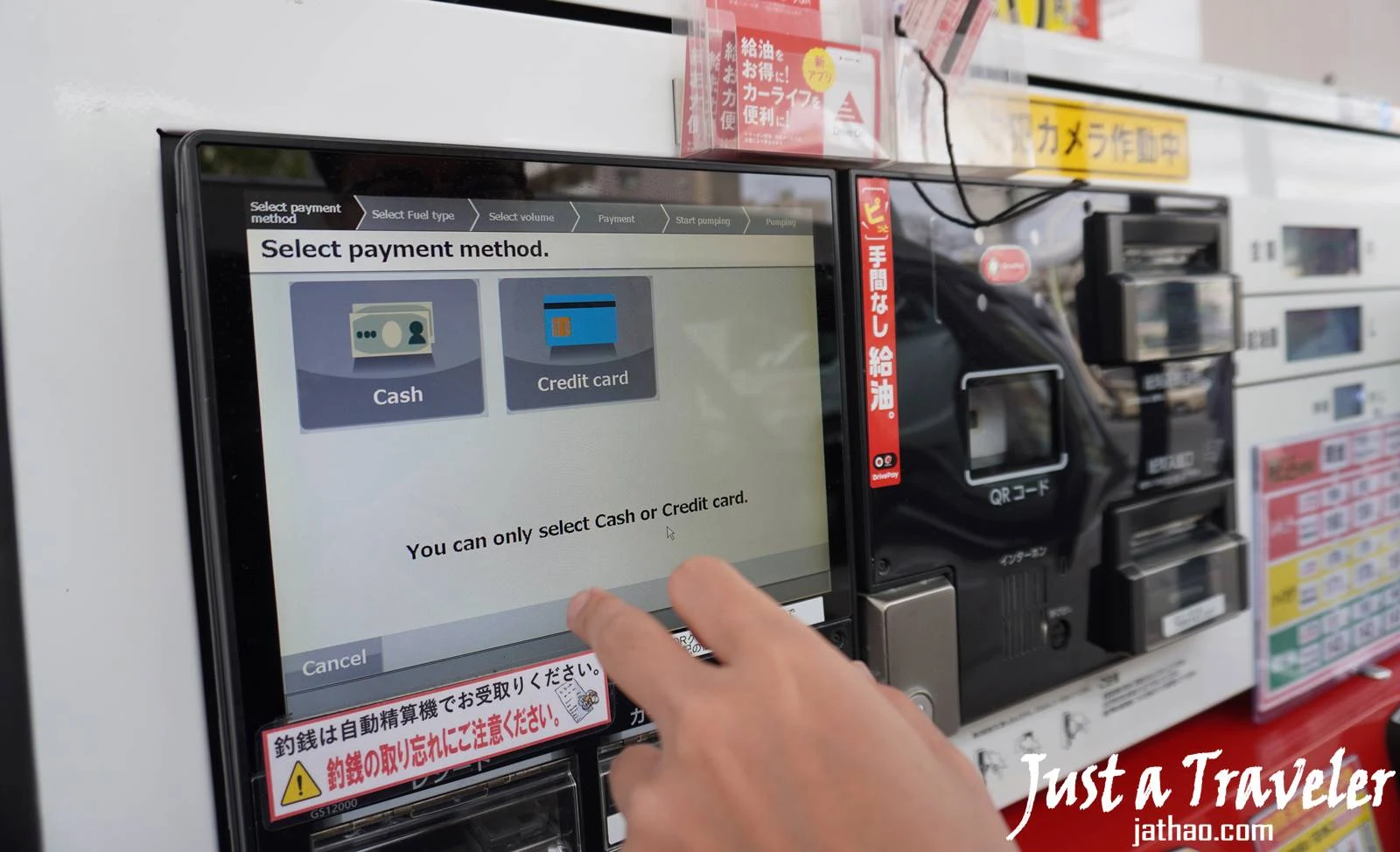


(Many gas stations in Okinawa are self-service. After parking beside the pump, follow the instructions on the touchscreen, which often features English options. The procedure follows 5 simple steps: select payment method, choose fuel type (standard passenger sedans almost always take Regular / レギュラー), specify amount or full tank, pay via cash or card, and dispense fuel. If you paid cash and are owed change, the pump will print a barcode voucher (釣銭預り券). Take this slip to the nearby change machine (自動精算機) and scan it to collect your coins and final receipt.)

(Parking is free across most scenic spots in Okinawa; you will mainly need paid parking in downtown Naha. Hourly rates typically range between 100 to 400 JPY depending on location and time of day, usually featuring daily caps. Pay close attention to how maximum rates are calculated: some apply a flat 12-hour or 24-hour ceiling from entry, some restrict caps to off-peak periods like overnight, and others reset at midnight. Reading the kanji carefully ensures there are no surprises.)
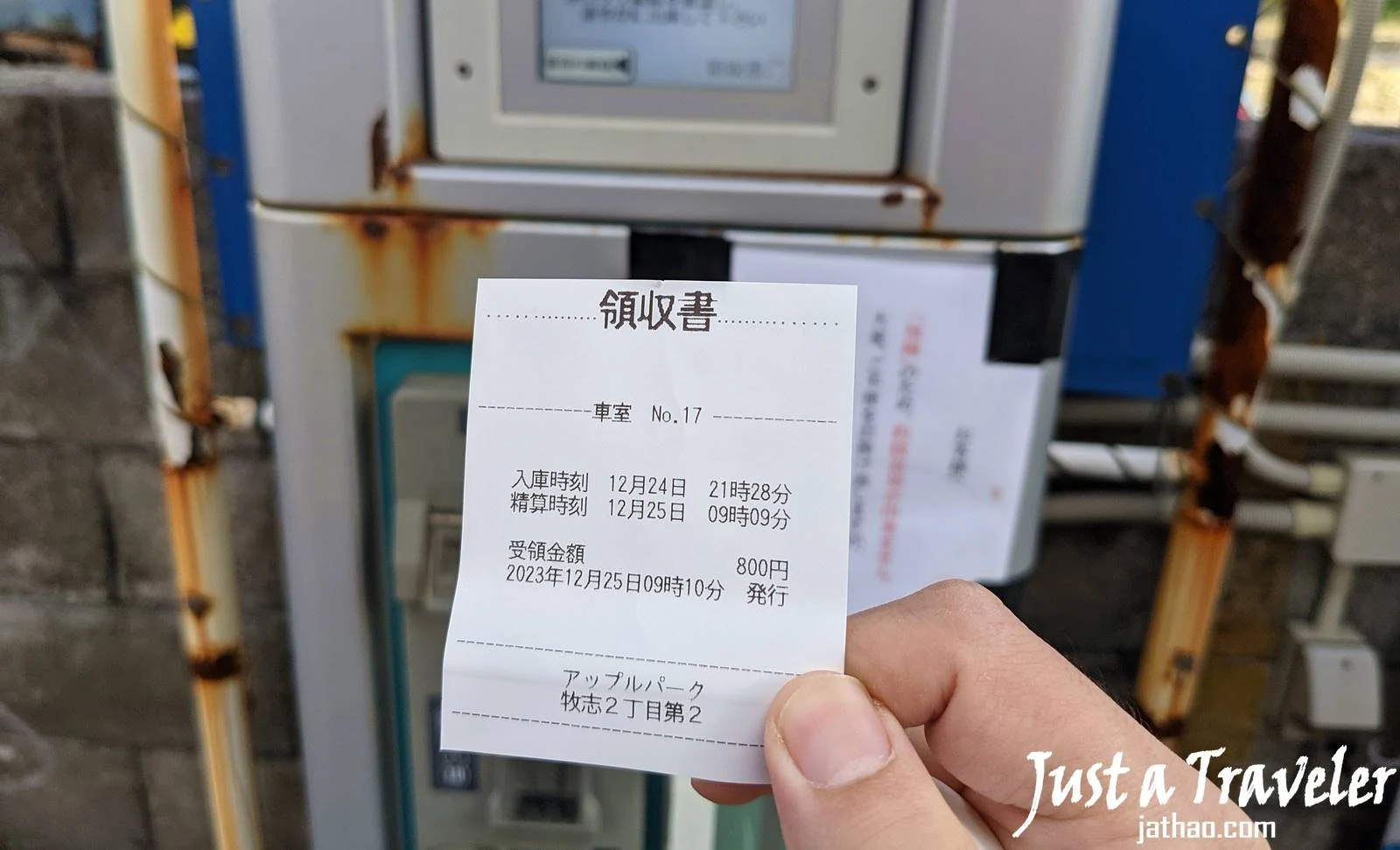
(When leaving an automated flap-style parking lot, walk over to the central payment terminal, key in your parking bay number, pay the required amount, and optionally print a receipt (領収書). The parking flap barrier will lower into the ground. Be sure to pull your car out promptly within 3 to 5 minutes, as the barrier will automatically rise again if you linger too long.)
4. Vehicle Return Procedure

(Returning the car is remarkably quick: an attendant inspects the fuel gauge, checks the bodywork, and collects the keys, wrapping up in about 3 minutes. Most rental companies enforce a full-tank return policy, so you must present your final gas station receipt—OTS will inspect it. If dropping off at the airport location, OTS provides a free shuttle back to the terminal. If returning at a downtown location like Omoromachi (Shintoshin), hop on the Okinawa Monorail (Yui Rail) to continue your journey.)
◎ Important Travel Tips & Reminders
- Regardless of the company you select, purchasing comprehensive premium insurance (zero deductible / collision damage waiver) is strongly advised for complete peace of mind.
- Japanese law mandates child safety seats for all children under 6 years old; rental agencies can provide them upon booking.
- Rental vehicles in Japan tend to have compact trunks. If traveling with your group at vehicle capacity, consider sizing up (e.g., booking a 7-seater minivan for 5 adults) to accommodate all luggage easily.
- In the event of an accident or scratch, call the police immediately and contact the rental agency. Without an official police accident report, insurance coverage will be invalid. (Emergency numbers in Japan are 110 for police and 119 for ambulance/fire.)
That wraps up my OTS rental experience in Okinawa! Across both road trips, the process has been seamless and time-efficient, with welcoming staff and straightforward communication. Whenever competitive rental rates appear, I would happily book with OTS again. I hope this detailed guide helps you plan an unforgettable self-drive adventure across Okinawa!